Your face moisturizer sits on your skin for hours every day. It’s one of the last things you apply at night and often the first in the morning. That makes it a quiet but steady source of whatever ingredients are in the jar-good or not-so-good.
Many conventional moisturizers rely on synthetic preservatives, fragrance blends, and petroleum-derived fillers to stay shelf-stable, smell “luxurious,” and feel silky. The problem is that some of those ingredients can contribute to hormone disruption, skin barrier irritation, or unnecessary chemical load on a body that’s already dealing with indoor air quality, stress, and environmental exposures. Your skin is porous. What goes on it doesn’t always stay on the surface.
Clean, effective alternatives exist that hydrate without the extras most of us don’t need.
DISCLAIMERS:
- As an Amazon affiliate, we may earn from qualifying purchases.
- The information provided here is for general informational purposes only and does not constitute medical advice. Always consult with a qualified healthcare professional for any health concerns or before making any decisions related to your health or treatment.
- Information provided in this post is updated as of the date of the post. Brands may reformulate products after the date of this post. Check back for updates.
Ingredients to Avoid in Brow Pencils, Powders & Gels
- Parabens: preservatives linked to endocrine disruption, known to be carcinogenic due to endocrine disruption. Parabens may be listed as methylparaben, ethylparaben, propylparaben, butylparaben, isobutylparaben, isopropylparaben, and benzylparaben.
- Fragrance/Parfum: umbrella term including hundreds of toxins, including hormone disrupting phthalates, as well as skin irritants and allergens. Chemicals that are hidden behind this term can be carcinogenic, respiratory irritants, endocrine disruptors, reproductive toxins, neurotoxins, and more.
- Formaldehyde-releasing preservatives (DMDM hydantoin, quaternium-15, imidazolidinyl urea, diazolidinyl urea): These slowly release small amounts of formaldehyde, a known carcinogen and skin sensitizer.
- Dyes: can be carcinogenic, genotoxic and offer no benefit to the product other than color (example: FD&C dyes, Red 40, Blue 1, Yellow 5)
- Ethoxylated ingredients (PEGs, PPGs, polysorbates, ceteareth, phenoxyethanol): ethoxylation process produces ethylene oxide, (carcinogen and developmental toxin) and 1,4-dioxane (a suspected carcinogen).
- Phenoxyethanol: deemed generally safe at a 1% concentration, however it’s production process, ethoxylation, can potentially contaminate phenoxyethanol with 1,4-dioxane and ethylene oxide (see above for ethoxylated ingredient description)
- Mineral oil / petrolatum (especially non-pharmaceutical grades): Creates a barrier but can be contaminated with polycyclic aromatic hydrocarbons (PAHs) and may feel occlusive in ways that don’t support long-term skin health for everyone.
- Phthalates (often hidden in “fragrance”): Endocrine disruptors that can affect reproductive health and development. Many brow products use synthetic fragrance or masking agents.
Popular Face Moisturizer Brands to Avoid
These are popular, widely available options that frequently contain one or more of the ingredients above. Occasional use is unlikely to cause issues for most people, but daily face application is where cumulative exposure adds up. Always check the current label-formulas change.
- Neutrogena Hydro Boost Water Gel: often contains fragrance and other synthetic additives. Lightweight feel comes with trade-offs for clean standards.
- Clinique Moisture Surge: fragrance and certain preservatives show up. The “hydrating” marketing doesn’t always match the cleanest profiles.
- Olay Regenerist or classic moisturizers: frequently include parabens, fragrance, or PEGs in various formulas.
- CeraVe Moisturizing Cream or Facial Moisturizing Lotion: loved by dermatologists for ceramides, but many versions contain petrolatum, phenoxyethanol, PEGs, or (in some lines) parabens. Not strictly non toxic by clean-beauty criteria.
- Cetaphil Daily Facial Moisturizer or similar: can include fragrance or less-preferred preservatives in popular variants.
- First Aid Beauty Ultra Repair Cream: fragrance and other flagged ingredients appear in some formulas; effective for many but not the cleanest.
- La Roche-Posay Toleriane or Double Repair: mixed – some contain fragrance or other concerns depending on the exact product.
- Aveeno or similar oat-based drugstore creams: often include fragrance or synthetic stabilizers despite the “gentle” positioning.
Best Non Toxic Face Moisturizers
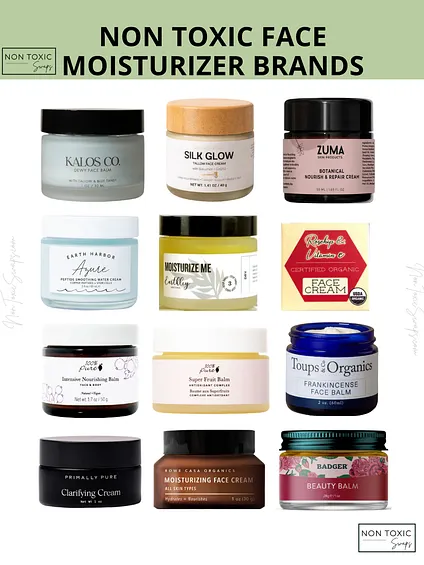
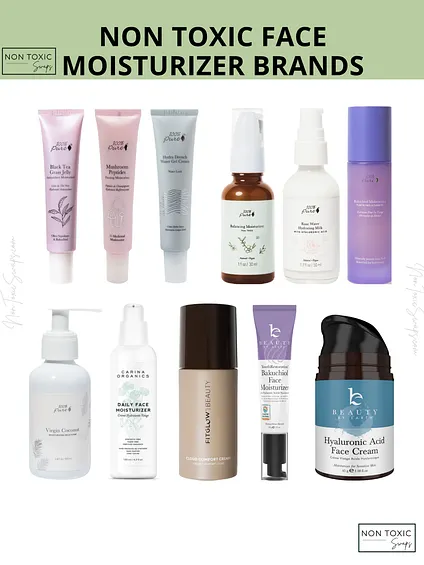
- 100% Pure Bakuchiol Facial Moisturizer
- 100% Pure Black Tea Grass Jelly Moisturizer
- 100% Pure Coffee Bean Moisturizer
- 100% Pure Green Tea ECGC Moisturizer
- 100% Pure Green Tea EGG Concentrate Cream
- 100% Pure Hydra Drench Water Gel Cream
- 100% Pure Intensive Nourishing Balm
- 100% Pure Mushroom Peptides Firming Moisturizer
- 100% Pure Restorative Sea Culture Extra Riche Creme
- 100% Pure Retinol Rosehip Face Cream
- 100% Pure Rose Water Hydrating Milk
- 100% Pure Super Fruit Balm
- 100% Pure Superfruit Nourishing Cream
- 100% Pure Tea Tree Balancing Moisturizer
- 100% Pure Tinted Moisturizer
- 100% Pure Virgin Coconut Moisturizing Milk Foam
- 100% Pure Vitamin C Brightening Face Cream
- 100% Pure Watermelon Cucumber Water Locking Moisturizer
- Badger Beauty Balm
- Beauty by Earth Bakuchiol Moisturizer
- Beauty by Earth Hyaluronic Face Cream
- Bubble and Bee Face Cream
- Carina Organics Daily Face Moisturizer
- Earth Harbor Azure Peptide Smoothing Water Cream
- Earth Harbor Mermaid Milk Nutrient Glow Moisturizer
- Earth Harbor Mermaid Moon Line-Filling Balm Cream
- Earth Harbor Nymph Nectar Superfruit Repair Balm
- Earth Harbor Siren Silk Bio-Retinol Hydration Cream
- Earthley Moisturize Me
- Fitglow Beauty Cloud Comfort Cream
- Kalos Co Dewy Face Balm
- Kalos Co Vital Face Balm
- Primally Pure Antioxidant Balm
- Primally Pure Clarifying Cream
- Primally Pure Plumping Cream
- Primally Pure Soothing Cream
- Puristry Seaberry Moisturizer
- Rowe Casa Organics Moisturizing Face Cream
- Toups & Co Organics Frankincense Face Balm
- Wellness by Ari Silk Glow Tallow Face Cream
- Zuma Botanical Nourish & Repair Cream