Many mainstream sunscreen brands contain ingredients that may pose health concerns, including potential carcinogens and endocrine disruptors. Switch to a safer, non toxic sunscreen to better protect both your skin and overall well-being.
DISCLAIMERS:
- As an Amazon affiliate, we may earn from qualifying purchases.
- The information provided here is for general informational purposes only and does not constitute medical advice. Always consult with a qualified healthcare professional for any health concerns or before making any decisions related to your health or treatment.
- Information provided in this post is updated as of the date of the post. Brands may reformulate products after the date of this post. Check back for updates.
Sunscreen Brands to Avoid
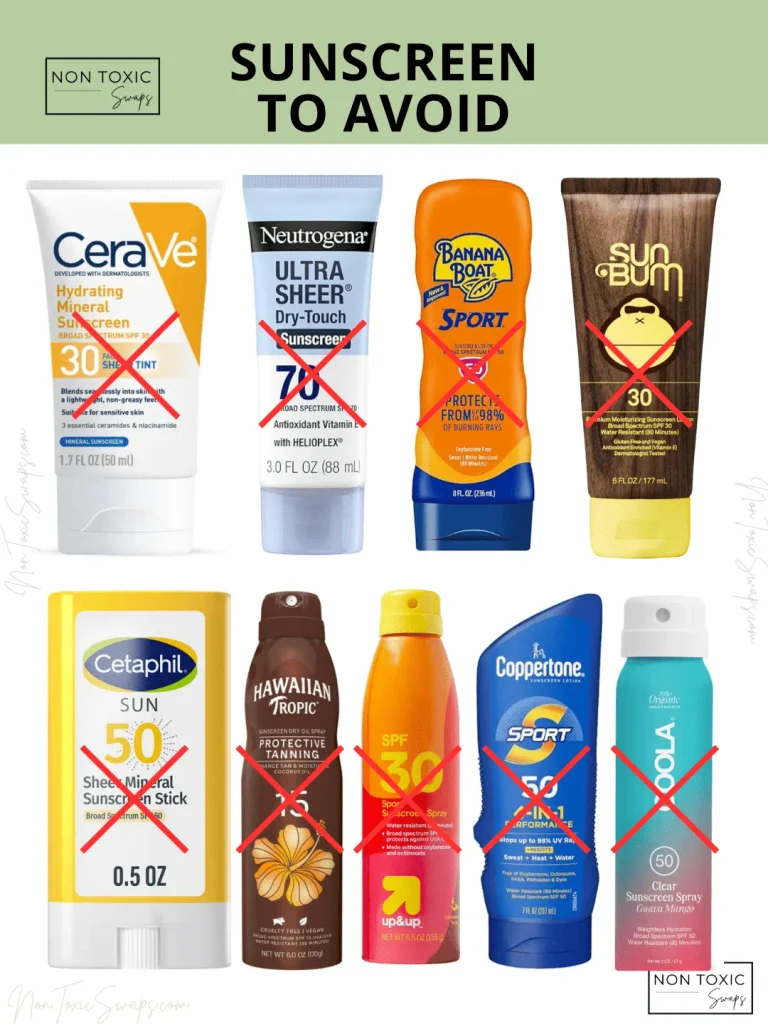
1. CeraVe Hydrating Mineral Sunscreen SPF 30 (Sheer Tint)
Its UV filters are zinc oxide and titanium dioxide, which are the most widely accepted sunscreen actives. The concern is the base formula: it contains PEG-30 dipolyhydroxystearate (PEGs can be contaminated with 1,4-dioxane during manufacturing), several aluminum compounds, and the preservatives phenoxyethanol and chlorphenesin.
2. Neutrogena Ultra Sheer Dry-Touch SPF 70
It relies on four chemical filters: avobenzone, octisalate, octocrylene and 15% homosalate. That homosalate level is about double the 7.34% maximum the EU now allows in face sunscreens. It also contains added fragrance. Neutrogena’s parent company also recalled several Neutrogena aerosol sunscreens in 2021 after benzene, a carcinogen, was detected.
3. Banana Boat Sport Ultra SPF 30
It uses avobenzone, homosalate, octisalate and octocrylene. Octocrylene has been shown to break down into benzophenone, a possible carcinogen, as the product ages. It also contains added fragrance, PEG-100 stearate and propylene glycol.
4. Sun Bum Original SPF 30 Lotion
Despite its natural, beachy branding, it uses the same chemical filters, including 10% octocrylene. It also contains fragrance, BHT and methylisothiazolinone, a preservative known for causing allergic skin reactions.
5. Cetaphil Sheer Mineral Sunscreen Stick SPF 50
Like CeraVe, the actives are mineral (zinc oxide and titanium dioxide), but they’re held in a petroleum-based stick. The base includes paraffin, polyethylene (a plastic), ozokerite and BHT, a synthetic preservative.
6. Hawaiian Tropic Protective Tanning Dry Oil
It’s a low-SPF product made to help you tan, not to prevent sun damage. It uses chemical filters including octocrylene, mineral oil as its base, and added fragrance (parfum) for its signature tropical scent.
7. up&up Sport Sunscreen Spray SPF 30 (Target)
It relies on avobenzone, homosalate, octisalate and octocrylene. As a spray, it’s also easy to inhale and hard to apply evenly. Benzene contamination concerns have centered on spray sunscreens.
8. Coppertone Sport 4-in-1 Performance SPF 50
It uses avobenzone, 10% homosalate, octisalate and octocrylene, plus added fragrance and PEG-100 stearate. Coppertone recalled five of its aerosol sunscreens in 2021 after benzene was found in them.
9. COOLA Classic Body Organic Sunscreen Spray SPF 50 (Guava Mango)
The “organic” label refers to its oils and botanicals, not its UV protection. The actual filters are avobenzone, homosalate, octisalate and nearly 10% octocrylene. It’s also a scented spray.
In an FDA study published in JAMA in 2020, avobenzone, homosalate, octisalate and octocrylene were all absorbed into the bloodstream above the level at which the FDA says more safety testing is needed. That’s why many people prefer mineral sunscreens with zinc oxide and a short, simple ingredient list.
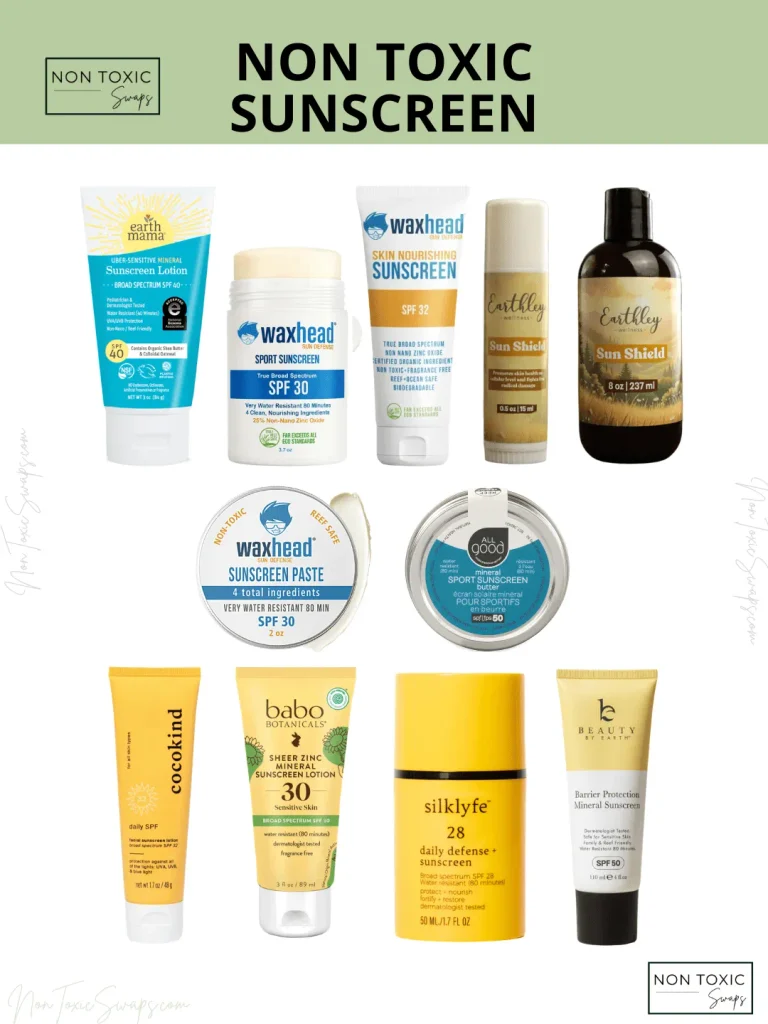
Best Non Toxic Sunscreen Brands
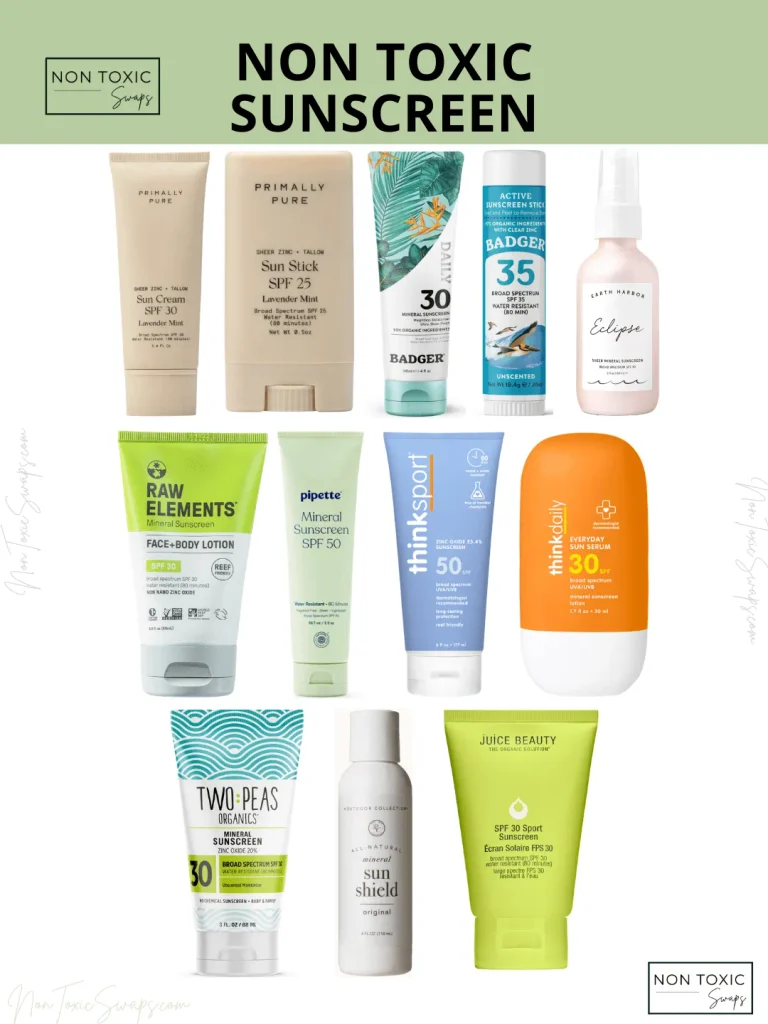
- 100% Pure Green Tea SPF
- All Good Mineral Sport Sunscreen
- All Good Mineral Sport Sunscreen Butter
- Babo Botanicals Sheer Zinc Mineral Sunscreen Lotion
- Badger Active Mineral Sunscreen Stick
- Badger Daily Mineral Sunscreen
- Beauty by Earth Mineral Sunscreen
- Cocokind Daily SPF
- Earth Harbor Eclipse Sheer Mineral Sunscreen
- Earth Mama Mineral Sunscreen Lotion
- Earthley Sun Shield
- Juice Beauty Sport Sunscreen
- Pipette Mineral Sunscreen Lotion
- Primally Pure Sun Cream SPF 30
- Primally Pure Sun Stick SPF 25
- Raw Elements Mineral Sunscreen Face + Body
- Rowe Casa Organics Sun Shield
- Earthley Sun Shield Stick
- Silklyfe Daily Defense Sunscreen
- Thinkdaily Everyday Sun Serum
- Thinksport Safe Sunscreen SPF 50+
- Two Peas Organics Sunscreen
- Waxhead Mineral Suncreen
- Waxhead Sport Sunscreen Stick
- Waxhead Sunscreen Paste
- Waxhead Zinc Oxide Sunscreen
Best Non Toxic Face Sunscreen Brands
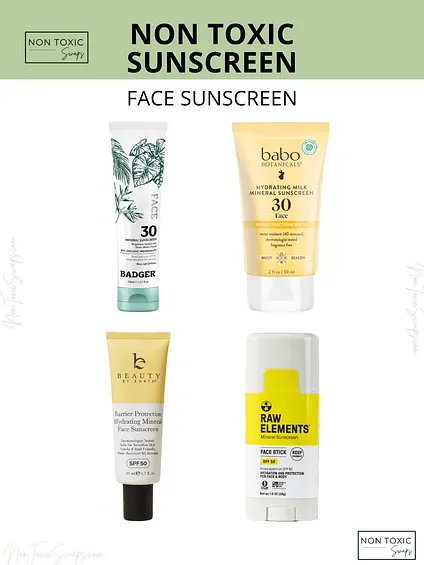
- Babo Botanicals Hydrating Milk Mineral Face Sunscreen
- Badger Face Mineral Sunscreen
- Beauty by Earth Mineral Face Sunscreen
- Raw Elements Mineral Sunscreen Face Stick
Best Non Toxic Tinted Sunscreen
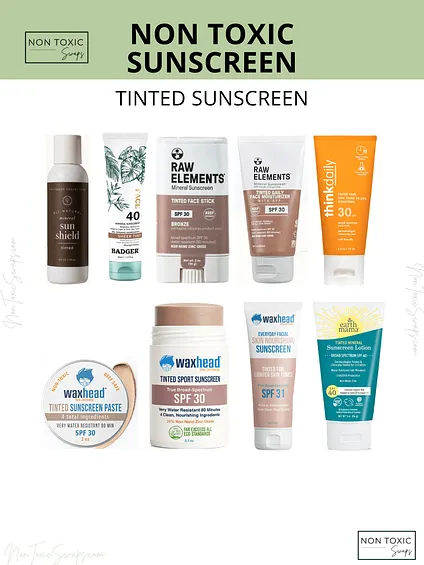
- Babo Botanicals Daily Sheer Mineral Tinted Sunscreen Stick
- Badger Tinted Face Mineral Sunscreen
- Earth Mama Tinted Mineral Sunscreen Lotion
- Raw Elements Tinted Face Sunscreen Stick
- Raw Elements Tinted Daily Face Moisturizer with SPF
- Rowe Casa Organics Tinted Sun Shield
- ThinkDaily Naturally Tinted Sunscreen
- Waxhead Tinted Sunscreen Paste
- Waxhead Tinted Sunscreen Stick for Face
- Waxhead Mineral Tinted Sunscreen For Face
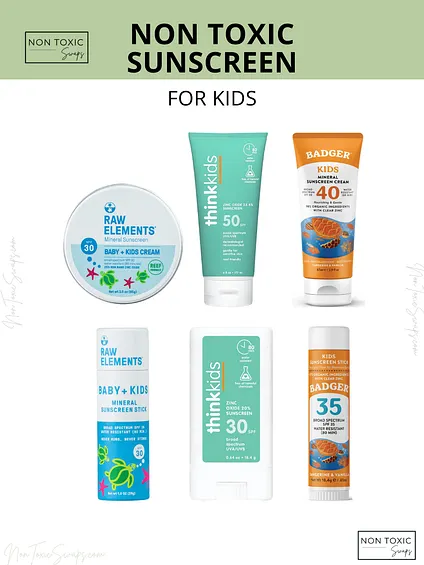
Best Non Toxic Baby + Kids Sunscreen
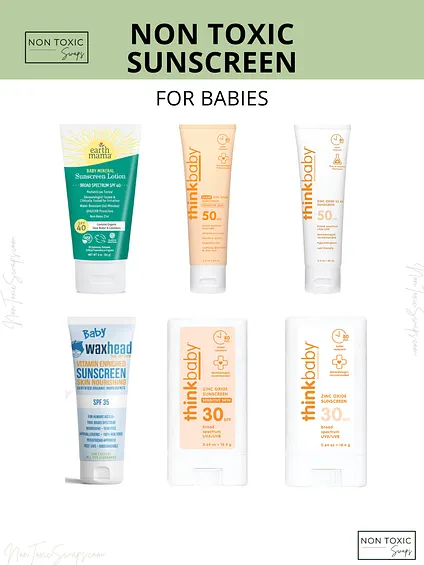
- Babo Botanicals Sensitive Baby Mineral Sunscreen Lotion
- Badger Baby Mineral Sunscreen Cream
- Waxhead Baby Mineral Sunscreen
- Thinkbaby Sunscreen Stick
- Thinkbaby Baby Sunscreen
- Earth Mama Baby Mineral Sunscreen Lotion
- Badger Kids Mineral Sunscreen
- Badger Kids Mineral Sunscreen Face Stick
- Raw Elements Baby + Kids Mineral Sunscreen Stick
- Raw Elements Mineral Sunscreen for Baby and Kids
- ThinkKids Sunscreen
- Thinksport Kids Sunscreen Stick