Non Toxic Feminine Care Products + Toxic Mainstream Brands to Avoid
November 26, 2026
Conventional feminine care products are often loaded with undisclosed chemicals, synthetic materials, and potential irritants that come into direct contact with highly absorbent tissue.
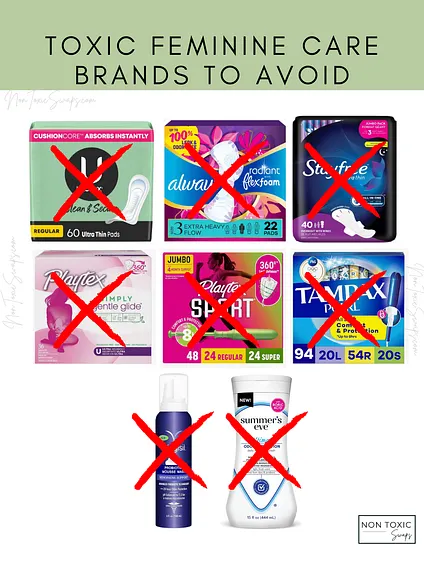
Mainstream feminine products (tampons, pads, wipes, washes, sprays) can contain things like synthetic fibers, fragrance/parfum (which can hide phthalates), dioxins from chlorine bleaching, preservatives linked to irritation or allergic reactions, and pesticide residues from non-organic cotton.
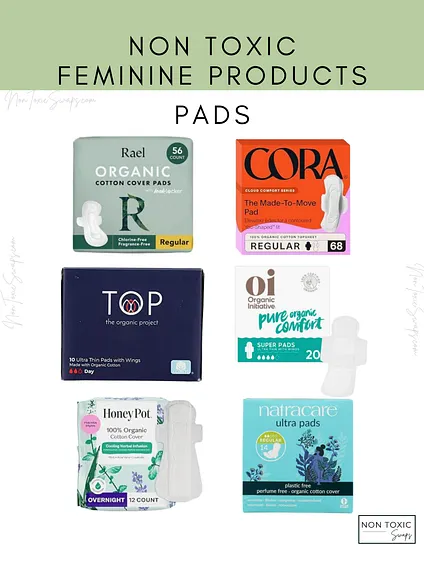
Today I’m breaking down why conventional feminine products can be concerning, plus safer non-toxic swaps to consider.
DISCLAIMERS:
As an Amazon affiliate, we may earn from qualifying purchases.
The information provided here is for general informational purposes only and does not constitute medical advice. Always consult with a qualified healthcare professional for any health concerns or before making any decisions related to your health or treatment.
Information provided in this post is updated as of the date of the post. Brands may reformulate products after the date of this post. Check back for updates.
Why Conventional Feminine Products Can Be Harmful
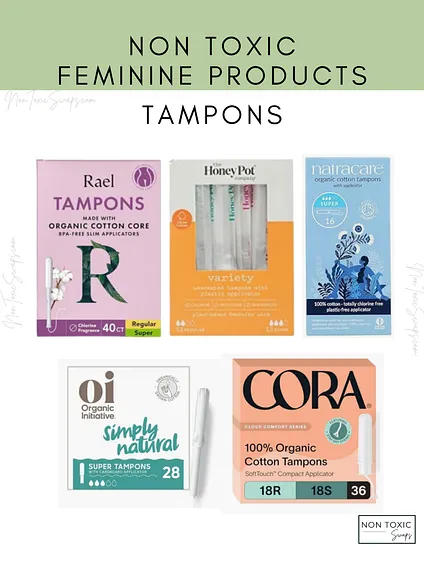
Synthetic Materials & Fibers – Many tampons and pads use rayon and plastics that may irritate sensitive tissues and could contribute to micro-tears and inflammation.
Chlorine-Bleached Cotton & Dioxins – Chlorine bleaching can create dioxins, which are toxic byproducts linked to hormone disruption and reproductive harm.
Fragrance/Parfum – “Fresh” scents commonly mask phthalates and allergens that aren’t fully disclosed on labels.
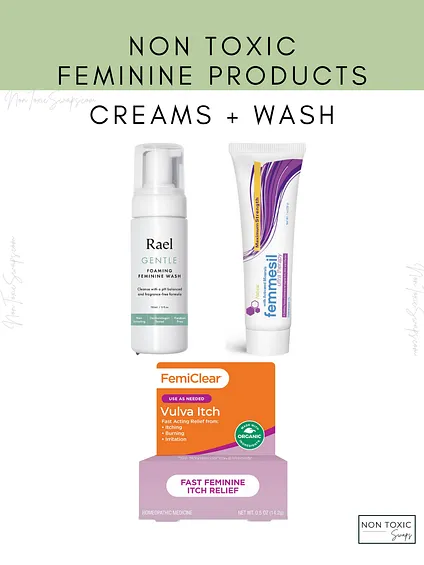
Preservatives & Additives – Some wipes, washes, or sprays contain parabens or formaldehyde-releasing preservatives, which can be irritating or endocrine-disrupting.
Pesticide Residue – Non-organic cotton may carry pesticide residues, and because vaginal tissue absorbs more than typical skin, exposure risk can be higher.
It can be hard to know exactly what you’re exposing yourself to because feminine care products aren’t required to fully disclose every ingredient, especially fragrance components.
What to Avoid in Feminine Care Products
Ingredient or material
Where you’ll find it
Why it matters
Tampon fibers & bleaching (cotton, rayon)
Tampons
Bleached without elemental chlorine to avoid dioxin; FDA says trace metals a 2024 study found are too small to cause harm.
A 2024 study found trace metals in tampons, but FDA says the amount released during use is too small to cause harm.
Are tampons bleached with chlorine?
FDA-authorized tampons are bleached without elemental chlorine, which prevents dangerous dioxin levels.
How do I lower the risk of toxic shock syndrome?
Use the lowest absorbency tampon you need and change it every 4-8 hours, even if your flow is light.
Final Thoughts
For pads, tampons and washes, the biggest swap is skipping fragrance. Choose fragrance-free products, the lowest tampon absorbency you need, and a wash without SLES or PEGs. For the rest of your routine, see our Non Toxic Body Wash guide.