Non Toxic Shaving Cream Swaps + Mainstream Brands to Avoid
Shaving is one of those everyday routines we rarely question – until irritation, breakouts, or dryness become impossible to ignore. What many people don’t realize is that conventional shaving creams often contain a cocktail of synthetic fragrances, harsh surfactants, and questionable preservatives that sit on the skin at its most vulnerable moment. This matters even more when shaving areas like the armpits, which are close to major lymph nodes and more prone to absorption through freshly shaved skin. Choosing a non-toxic shaving cream isn’t about being “extra” – it’s about protecting your skin barrier, reducing unnecessary chemical exposure, and getting a smoother shave that actually feels good afterward.
DISCLAIMERS:
As an Amazon affiliate, we may earn from qualifying purchases.
The information provided here is for general informational purposes only and does not constitute medical advice. Always consult with a qualified healthcare professional for any health concerns or before making any decisions related to your health or treatment.
Information provided in this post is updated as of the date of the post. Brands may reformulate products after the date of this post. Check back for updates.
Ingredients to Avoid in Toxic Shaving Cream
When you’re shopping for shaving products that actually care for your skin, the ingredient label matters almost as much as your razor choice. Traditional shaving creams often rely on chemical helpers that can irritate skin, disrupt hormones, or even carry harmful contaminants. Here are the main troublemakers to watch for:
Sulfates (SLS, SLES) – harsh surfactants that strip natural oils, leading to dryness, irritation, or rash.
Artificial Fragrances & Phthalates – fragrance masking often hides phthalates, which are linked to hormonal disruption and allergic reactions.
PEGs (Polyethylene Glycol) – thickening agents that can be contaminated with ethylene oxide and 1,4-dioxane, both of which are environmental and health concerns.
Triethanolamine (TEA) & DEA/MEA – pH adjustors that can form nitrosamines, potential carcinogens.
Mineral Oil – a petroleum–derived occlusive that sits on the skin and may clog pores, rather than nourish the skin.
Parabens & BHT/BHA – preservatives with links to hormone disruption and irritation.
Silicones (e.g., Dimethicone) – synthetic polymers that can impede skin breathing and trap product build-up.
The mantra for a non-toxic shave? Look for plant-derived moisturizers like coconut oil, jojoba, shea butter, and glycerin – and avoid harsh chemicals that promise big lathers but deliver dryness and irritation instead.
Mainstream Brands to Avoid
While “mainstream” doesn’t always equal toxic, many widely available shaving creams or gels rely on chemical additives that don’t align with a non toxic mission – especially if you have sensitive skin or care about long-term skin health.
Typical mass market offenders include products that contain the ingredients listed above – especially synthetic fragrances, sulfates, mineral oils, and preservatives like BHT. These are common in big-box brands and drugstore shaving gels.
The rule of thumb: mainstream value-priced shave gels and canned foams are more likely to sacrifice clean ingredients for shelf stability and lather. Reading labels – and opting for products free of the red-flag ingredients above – is your best defense.
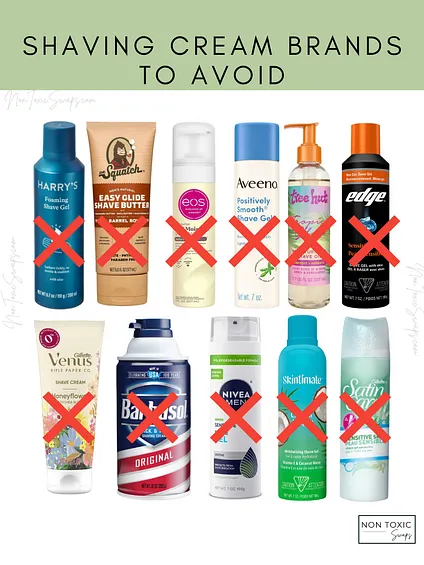
Here are a few popular shaving creams and why you should avoid them:
Pacific Shaving Company Natural Shaving Cream – includes potassium hydroxide and phenoxyethanol
The Art of Shaving Unscented Shaving Cream – includes Potassium Hydroxide, Parfum/Fragrance, Triethanolamine, Phenoxyethanol, Sodium Hydroxide, PEG-4 Laurate, PEG-4 Dilaurate, PEG-4
Barbasol – includes Isobutane, Triethanolamine, Sodium Lauryl Sulfate, Propane, Fragrance
Tree Hut Bare Moisturizing Shave Oil – contains Polysorbate 20, Polyquaternium-10, Fragrance (Parfum), Phenoxyethanol
Edge Shave Gel – includes Triethanolamine, Isobutane, Pvp, Fragrance, Peg-90m, Blue 1
Gilette Satin Care – includes Triethanolamine, Isobutane, Fragrance, Blue 1
Aveeno Positively Smooth Shave Gel – includes Triethanolamine, Isobutane, Peg-12 Dimethicone, Fragrance, Phenoxyethanol, Methylparaben, Propylparaben, Ethylparaben
Skintimate Shaving Cream and Gel – includes Triethanolamine, Isobutane, Pvp, Fragrance/Parfum, Peg-90m, Blue 1
NIVEA Men Sensitive Skin Shaving Gel with Vitamin E – contains Triethanolamine, Isobutane, Polyisobutene, Peg-90 Glyceryl Isostearate, Peg-14m, BHT, Fragrance
Harry’s Men’s Foaming Shave Gel with Aloe – includes Triethanolamine, Isobutane, Phenoxyethanol, Fragrance/Parfum, Polysorbate 60, Hexamethylindanopyran, Tetramethyl Acetyloctahydronaphthalenes
Shaving Cream Tiered by Budget (Sorted by Price Per oz)
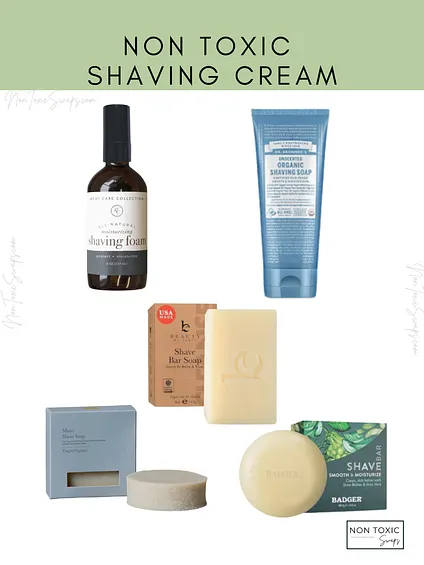
Here’s a clear breakdown of non-toxic shaving options by approximate cost per ounce (helps you see where the value is), from budget-friendly to more premium.