Non Toxic Baby Wash Swaps + 8 Mainstream Brands to Avoid
If you thought baby products would be better regulated than products for adults, think again. The same greenwashing that goes on with products for us, is also happening with products designed for babies and kids.
The “pure” and “natural” claims on the label of a product don’t have to mean much of anything. When you read the ingredient label you’ll see the truth behind these general label terms.
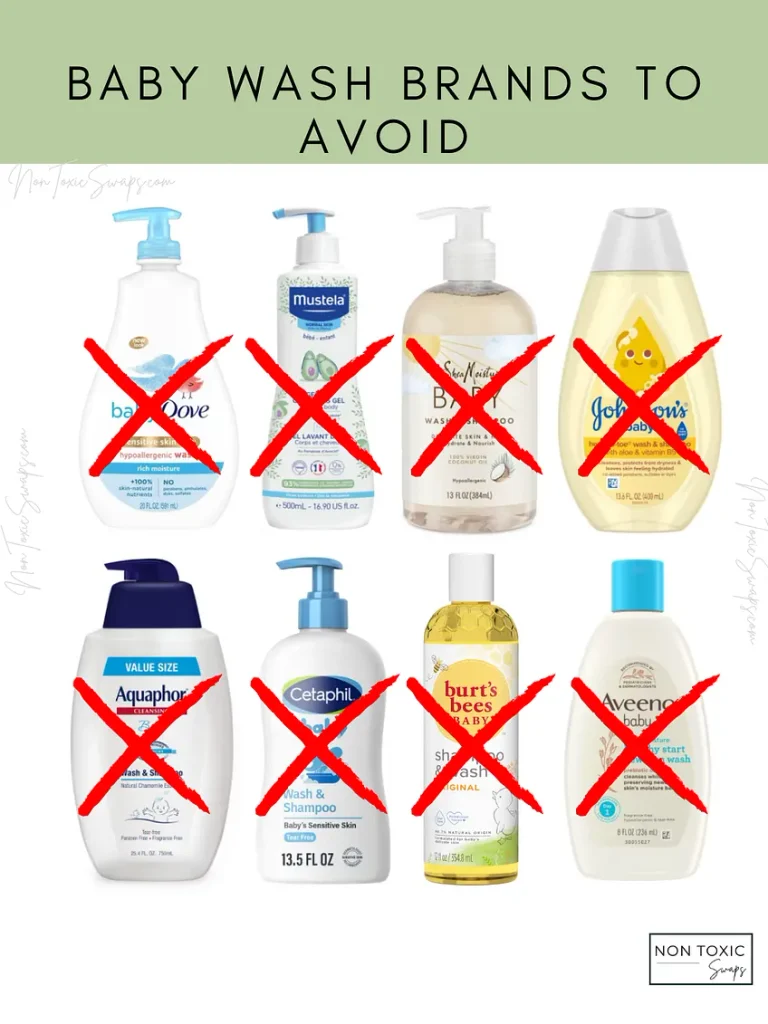
Babies have delicate skin that easily absorbs more than we think and many popular brands still have harmful chemicals like “fragrance”, parabens, phthalates and more.
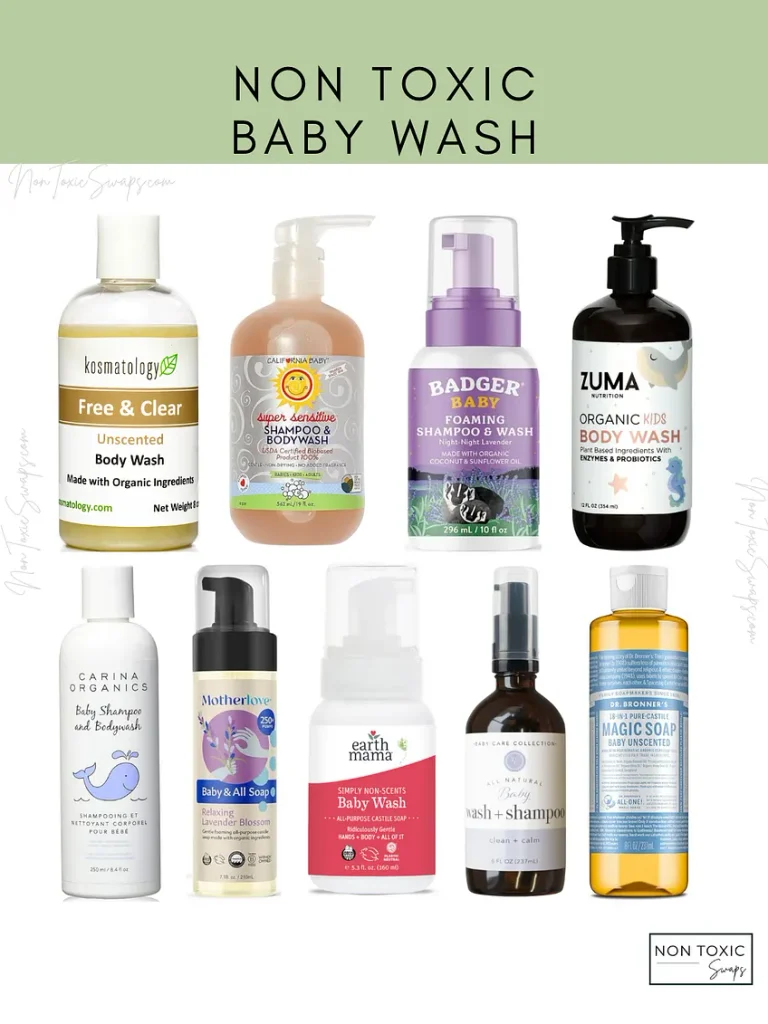
The good news is that there are excellent non toxic baby washes out there that clean gently, without the chemical additives.
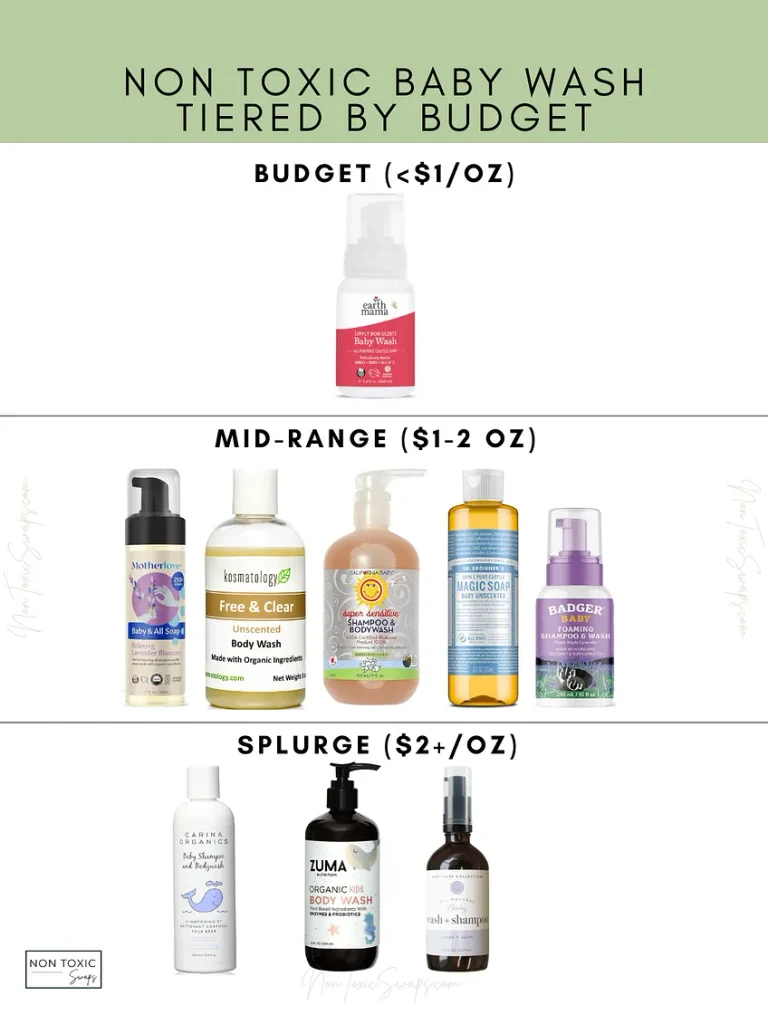
Let’s break it down: why it matters, what to avoid, and the non toxic baby wash list.
DISCLAIMERS:
As an Amazon affiliate, we may earn from qualifying purchases.
The information provided here is for general informational purposes only and does not constitute medical advice. Always consult with a qualified healthcare professional for any health concerns or before making any decisions related to your health or treatment.
Information provided in this post is updated as of the date of the post. Brands may reformulate products after the date of this post. Check back for updates.
Why Switch to Non Toxic Baby Wash?
Babies’ skin is thinner, more permeable, and less able to detoxify compared to adults. Daily exposure to harsh surfactants, synthetic fragrances, or hidden contaminants (like 1,4-dioxane or formaldehyde releasers) can irritate, dry out, or contribute to sensitivities, allergies, or long-term concerns.
Non toxic options:
Use plant-based, mild cleansers that preserve the skin barrier
Skip endocrine disruptors, allergens, and carcinogen-linked byproducts
Peace of mind during those sweet tub moments is priceless.
Ingredients to Avoid in Baby Lotion
Steer clear of these toxic ingredients commonly found in baby wash:
Synthetic fragrances / “fragrance” or “parfum” – can hide phthalates and trigger allergies
Sulfates (SLS, SLES) – strip natural oils, cause dryness/irritation, may contain 1,4-dioxane
Parabens – hormone disruptors
Phthalates – often in fragrances, linked to developmental issues