Non Toxic Baby Lotion + 9 Mainstream Brands to Avoid
November 22, 2026
Did you know the “good” smelling name-brand baby lotion only smells like that because of toxic ingredients? Many people fall into the trap of thinking “hypoallergenic” and “gentle for baby” meant it was safe.
Many mainstream baby lotions rely on fragrance, petroleum-based moisturizers and preservatives like phenoxyethanol. Fragrance is the one most worth skipping: it’s a leading cause of skin allergies from cosmetics.
Baby skin is a miracle – thinner, more absorbent, and still building its protective barrier. But that also means it soaks up 60% more of what you put on it than adult skin does. Why risk it with chemicals linked to allergies, eczema flares, and long-term developmental issues? I’ve dug through hundreds of formulas (so you don’t have to) to spotlight the toxic traps and the clean swaps that actually work. Let’s ditch the greenwashing and get your little one’s skin glowing safely.
DISCLAIMERS:
As an Amazon affiliate, we may earn from qualifying purchases.
The information provided here is for general informational purposes only and does not constitute medical advice. Always consult with a qualified healthcare professional for any health concerns or before making any decisions related to your health or treatment.
Information provided in this post is updated as of the date of the post. Brands may reformulate products after the date of this post. Check back for updates.
May be contaminated with 1,4-dioxane, a possible carcinogen, and ethylene oxide, a known carcinogen, both by-products of how they’re made.
Look for instead:fragrance-free lotions made with plant oils and butters like shea, jojoba and calendula, or essential oils listed by name if you want scent.
10 Mainstream Baby Lotions to Avoid
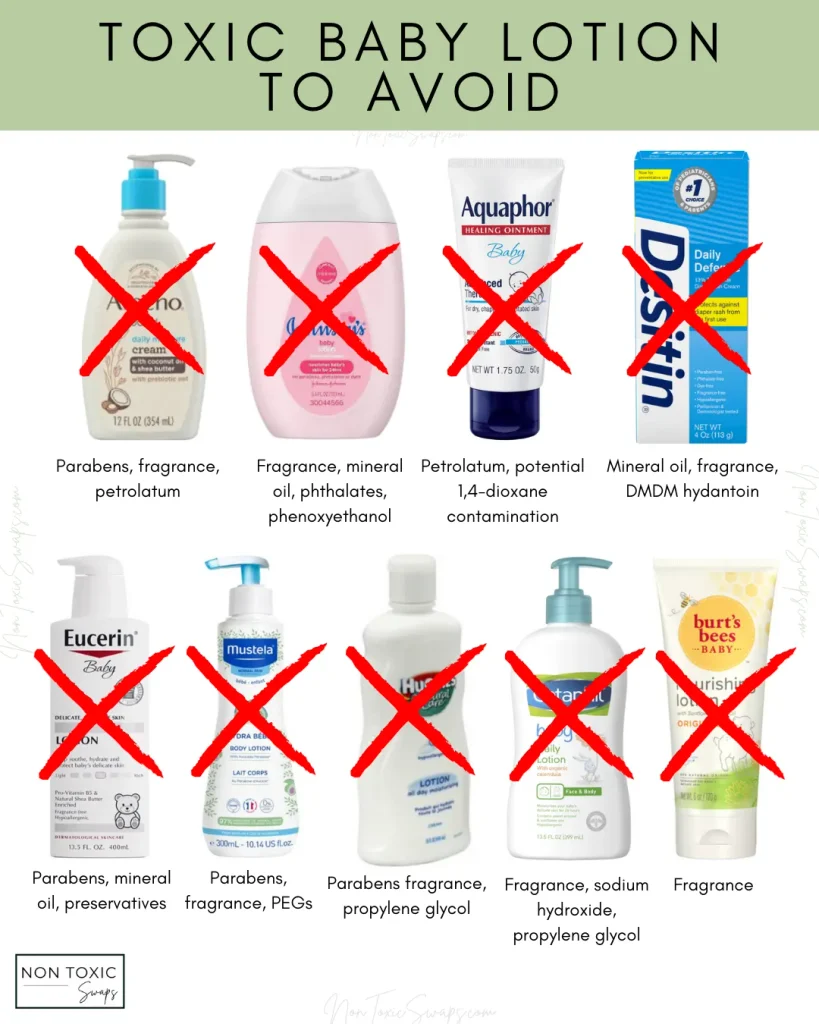
These are the drugstore staples that promise “gentle care” but deliver a dose of regret. I pulled ingredients from current 2025 labels – don’t fall for the cute packaging.
Johnson’s Baby Lotion – That classic baby smell comes from an undisclosed fragrance blend, a leading cause of skin allergies from cosmetics. It’s preserved with phenoxyethanol.
Aveeno Baby Daily Moisture Lotion – Fragrance-free with colloidal oatmeal, but it relies on petrolatum, a petroleum-based moisturizer.
Desitin Daily Protection Lotion – Mineral oil, fragrance, DMDM hydantoin (formaldehyde releaser). Sticky and sensitizing.
Aquaphor Baby Healing Ointment (lotion version) – Fragrance-free and made with ceramides, but it’s preserved with phenoxyethanol.
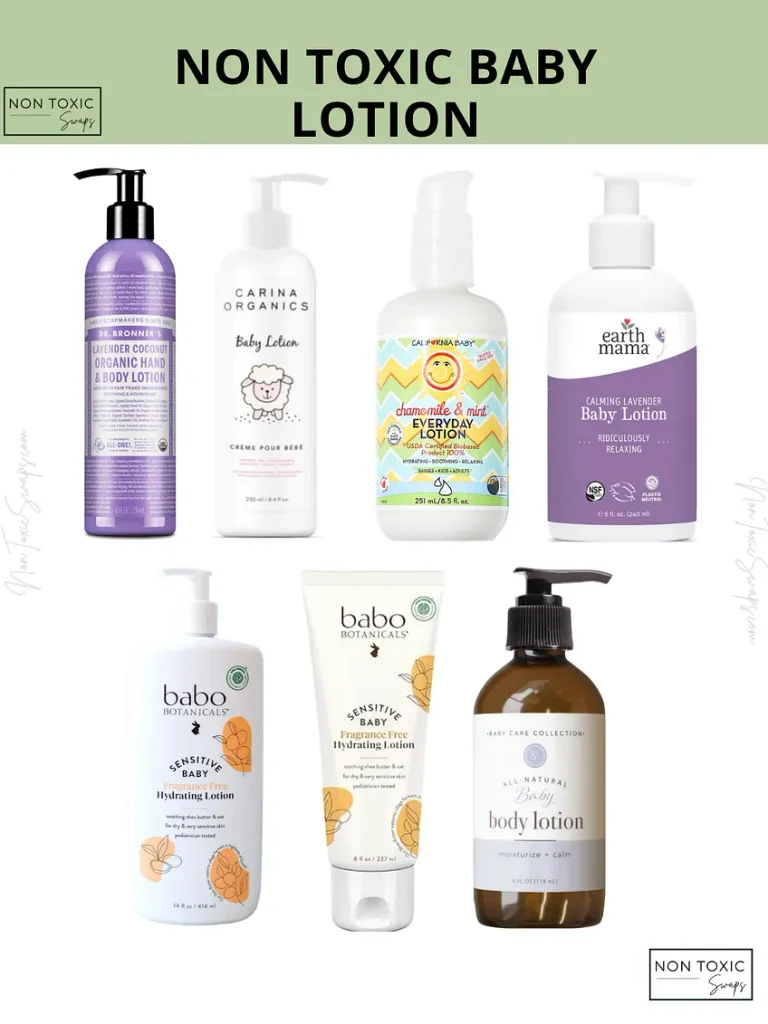
These baby lotions are made with plant-based ingredients like shea butter, jojoba, and calendula for real hydration. Focus on ingredients you can pronounce!
California Baby Calming, Earth Mama Sweet Orange and Dr. Bronner’s are scented with essential oils (lavender, clary sage, sweet orange). They’re listed by name, but they can still cause irritation or allergies, so choose unscented, like Carina Organics Extra Gentle, if your baby’s skin is sensitive.
The current Johnson’s Baby Lotion (Pink) contains fragrance and phenoxyethanol. Fragrance is a leading cause of skin allergies from cosmetics, so it’s not our pick for sensitive baby skin.
Is Aveeno baby lotion non toxic?
Aveeno Baby Daily Moisture Lotion is fragrance-free and has no parabens, but it uses petrolatum. The highly refined petrolatum required in cosmetics isn’t expected to pose a health risk; some parents still prefer plant-based lotions.