Why Switch to Non Toxic Baby Wash?
Babies’ skin is thinner, more permeable, and less able to detoxify compared to adults. Daily exposure to harsh surfactants, synthetic fragrances, or hidden contaminants (like 1,4-dioxane or formaldehyde releasers) can irritate, dry out, or contribute to sensitivities, allergies, or long-term concerns.
Non toxic options:
- Use plant-based, mild cleansers that preserve the skin barrier
- Skip common allergens like fragrance, and ingredients that may be contaminated with 1,4-dioxane
Peace of mind during those sweet tub moments is priceless.
Ingredients to Avoid in Baby Lotion
| Ingredient | What it does | Why it’s a concern |
|---|---|---|
| Fragrance (or parfum) | Scent | An undisclosed blend of scent chemicals; fragrance is a leading cause of skin allergies from cosmetics and can include phthalates. |
| Phthalates (usually hidden in “fragrance”) | Fragrance solvent | Solvents often hidden in fragrance; one human study linked higher levels in pregnant mothers to shorter anogenital distance in baby boys. |
| SLES (sodium laureth sulfate) | Foaming cleanser | A foaming agent that may be contaminated with 1,4-dioxane, a possible carcinogen; it can also irritate skin and eyes. |
| SLS (sodium lauryl sulfate) | Foaming cleanser | A strong foaming cleanser that can strip skin’s oils and irritate dry or sensitive skin; researchers use it to cause irritation. |
| Ethoxylated ingredients (PEG-, laureth-, polysorbate) | Cleansers and emulsifiers | May be contaminated with 1,4-dioxane, a possible carcinogen, and ethylene oxide, a known carcinogen, both by-products of how they’re made. |
| Parabens (methylparaben, propylparaben, butylparaben) | Preservative | Preservatives that act on estrogen receptors in lab studies; one human study linked higher levels to earlier puberty in girls. |
| Formaldehyde releasers (quaternium-15, DMDM hydantoin) | Preservative | Preservatives that slowly release formaldehyde, a known carcinogen; FDA also lists them among cosmetic ingredients that can cause skin allergies. |
| Synthetic dyes (Yellow 5, Red 40, Blue 1) | Color | Added only for color; FDA notes Yellow 5 can cause itching and hives, and hyperactivity concerns come from food studies. |
Look for instead: gentle plant-based cleansers like decyl or lauryl glucoside, or saponified oils (castile soap), and no added fragrance.
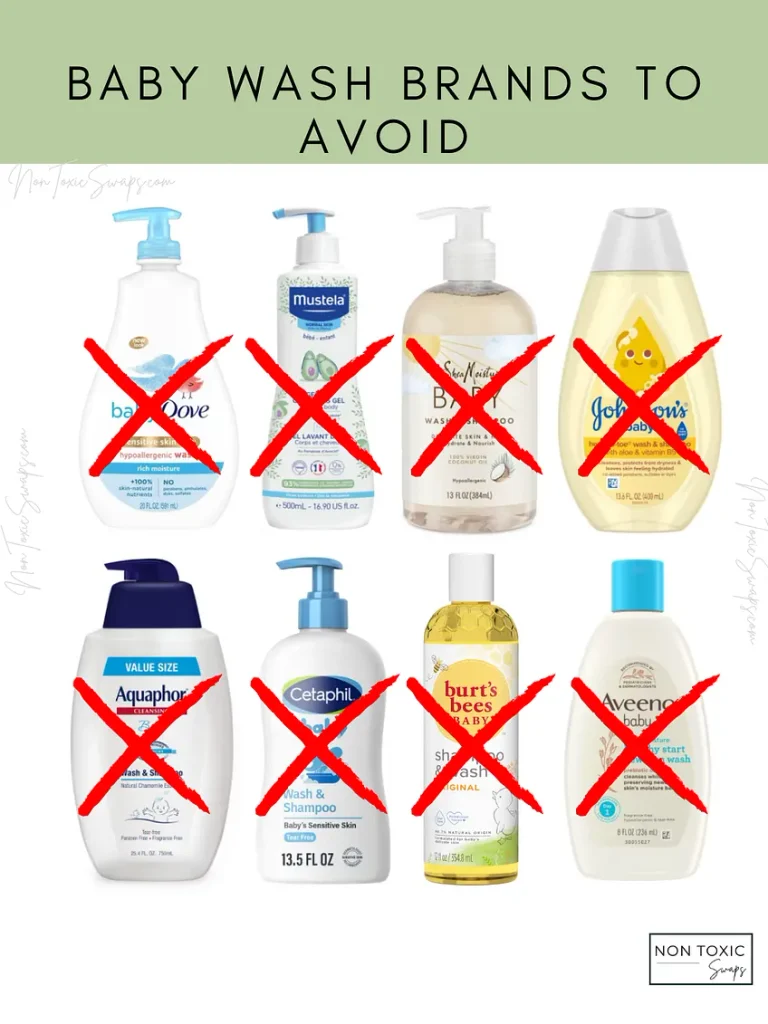
8 Mainstream Baby Wash Brands to Avoid
Non Toxic Baby Wash Swaps
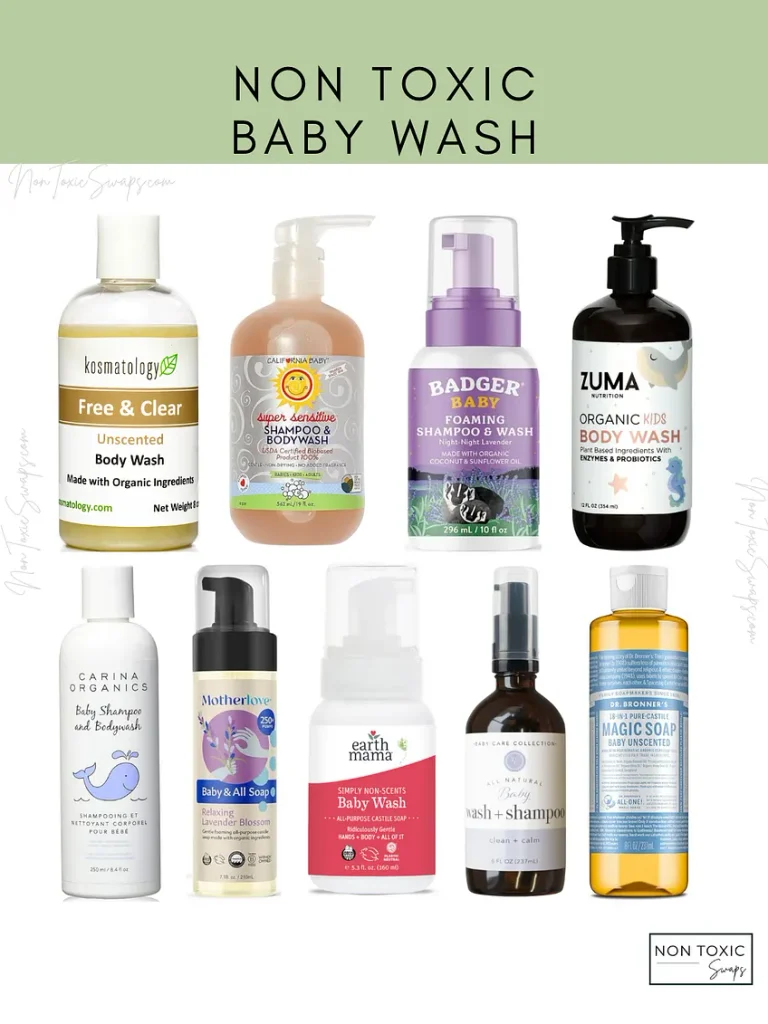
Some of these products are scented with essential oils. They’re listed by name, but they can still cause irritation or allergies, so choose unscented if your baby’s skin is sensitive.
- California Baby Super Sensitive Baby Shampoo + Baby Wash
- Earth Mama Castile Baby Wash
- Carina Organics Baby Shampoo & Body Wash
- Badger Baby Foaming Shampoo & Wash
- Motherlove Baby & All Soap
- Kosmatology Body Wash
- Dr. Bronner’s Castile Soap – dilute by using drops at a time in the bath
- Zuma Nutrition Organic Body Wash for Kids
Non Toxic Baby Wash Tiered By Budget
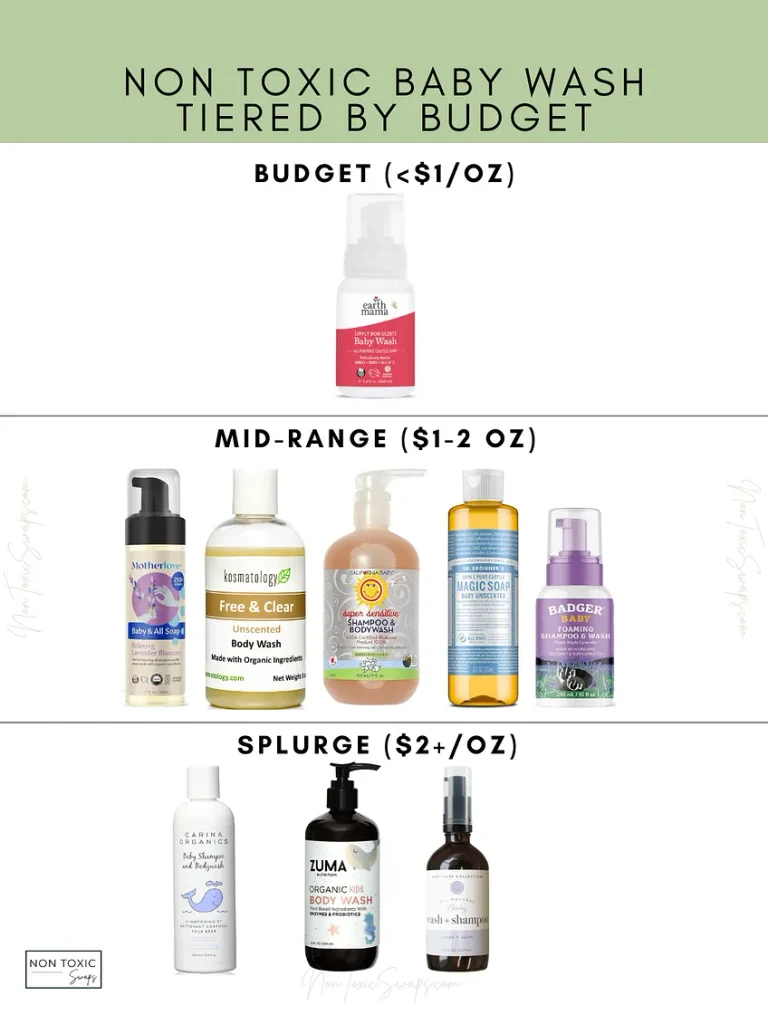
Under $1 per oz
$1-2 per oz
- Badger Baby Foaming Shampoo & Wash
- Motherlove Baby & All Soap
- Kosmatology Body Wash
- Dr. Bronner’s Castile Soap
- California Baby Super Sensitive Baby Shampoo + Baby Wash
$2+ per oz
- Carina Organics Baby Shampoo & Body Wash
- Zuma Nutrition Organic Body Wash for Kids
- Rowe Casa Baby Wash + Shampoo