Want a bug repellent with a cleaner ingredient list? Start with what actually works. CDC recommends EPA-registered repellents with DEET, picaridin, IR3535, oil of lemon eucalyptus (OLE), PMD or 2-undecanone, and EPA’s 2014 review found that normal use of DEET doesn’t present a health concern for the general population, including children.
Many “natural” repellents use essential oils like citronella and lemongrass. EPA doesn’t test these “minimum risk” products for effectiveness, so save them for lower-stakes moments like a backyard evening, not areas with ticks or mosquito-borne disease. Below you’ll find what to check on the label and essential-oil options for low-risk use. For ticks or mosquito-borne disease areas, look for an EPA registration number on the label.
DISCLAIMERS:
As an Amazon affiliate, we may earn from qualifying purchases.
The information provided here is for general informational purposes only and does not constitute medical advice. Always consult with a qualified healthcare professional for any health concerns or before making any decisions related to your health or treatment.
Information provided in this post is updated as of the date of the post. Brands may reformulate products after the date of this post. Check back for updates.
An undisclosed blend of scent chemicals; fragrance is a leading cause of skin allergies from cosmetics and can include phthalates.
Oxybenzone (in sunscreen + repellent combos)
UV filter
Absorbed into the bloodstream above the level at which FDA says more safety testing is needed, in an FDA study; FDA still recommends using sunscreen.
No EPA registration number
—
CDC recommends EPA-registered repellents (DEET, picaridin, IR3535, oil of lemon eucalyptus, PMD or 2-undecanone); essential-oil “minimum risk” repellents aren’t tested by EPA for effectiveness.
About DEET: The most studied insect repellent. EPA’s 2014 review found that normal use doesn’t present a health concern for the general population, including children, though it can cause skin reactions in rare cases. If you’d rather skip it, picaridin, IR3535, oil of lemon eucalyptus and PMD are also CDC-recommended.
For kids: CDC says not to use oil of lemon eucalyptus or PMD on children under 3; EPA now allows some oil of lemon eucalyptus products for younger children, so follow the label. Don’t apply any repellent to a child’s hands, eyes, mouth, cuts or irritated skin.
Look for instead: an EPA registration number on the label, with DEET, picaridin, IR3535, oil of lemon eucalyptus, PMD or 2-undecanone as the active ingredient, and fragrance-free formulas if your skin is sensitive.
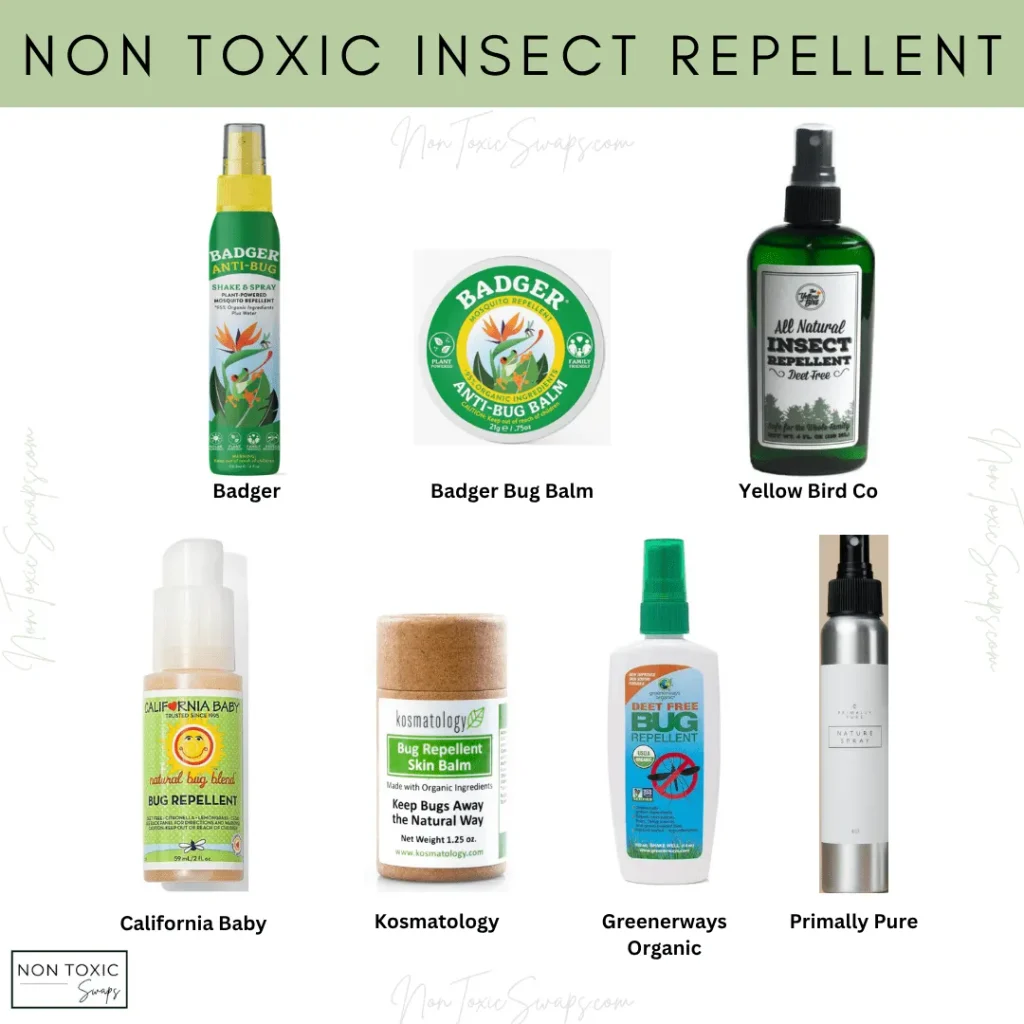
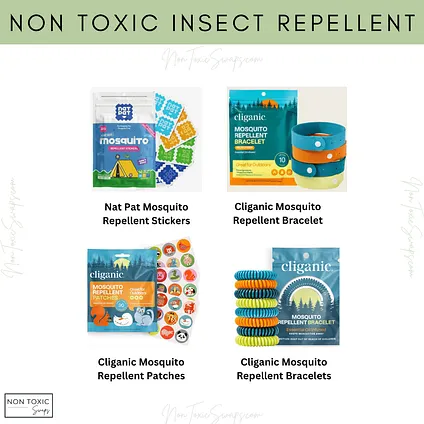
Non Toxic Insect Repellent
These use essential oils like citronella and lemongrass. EPA doesn’t test “minimum risk” repellents for effectiveness, and they usually need frequent reapplication. Essential oils can also cause irritation or allergies, so patch-test first if your skin is sensitive.
EPA’s 2014 review found that normal use of DEET doesn’t present a health concern for the general population, including children, though it can cause skin reactions in rare cases. Follow the label: apply the amount it says, and don’t overuse it.
Does natural bug spray work?
Some do, for a while. EPA doesn’t test essential-oil “minimum risk” repellents for effectiveness, and in one study some citronella and geraniol products showed no significant repellency. CDC recommends oil of lemon eucalyptus, a plant-derived active ingredient, and PMD, its main active component; look for products with an EPA registration number.
What bug spray is safe for kids?
CDC says not to use oil of lemon eucalyptus or PMD on children under 3; EPA now allows some oil of lemon eucalyptus products for younger children, so follow the label. Don’t apply any repellent to a child’s hands, eyes, mouth, cuts or irritated skin.
Final Thoughts
The best bug repellent is one that works for where you’ll be. For a backyard evening, you might try an essential-oil spray or balm, though EPA hasn’t tested how well they work. For hiking, travel or anywhere with ticks or mosquito-borne illness, use an EPA-registered repellent; oil of lemon eucalyptus is a plant-derived EPA-registered option if you’d rather skip DEET. Heading out in the sun too? See our Non Toxic Sunscreen post.