If you’re using conventional laundry detergent, you’re likely getting daily chemical exposure in two main ways: lingering fragrance and direct skin contact.
Fragrances are formulated to stick to fabric so clothes smell “fresh” long after the wash. Those synthetic chemicals can include compounds linked to cancer risk and endocrine disruption.
Because your clothes sit against your skin for hours, residual detergent can also off-gas into the air you breathe and be absorbed through the skin.
Conventional detergents are built for big suds, bright whites, and that signature long-lasting scent. The trade-off is a list of ingredients tied to respiratory irritation, skin sensitization, hormone disruption, and poorer indoor air quality. In summer – when we sweat more, wash more often, and sometimes dry clothes indoors – the exposure adds up faster.
The good news is that cleaner options that actually work exist, and the switch is simpler than it used to be.
DISCLAIMERS:
- As an Amazon affiliate, we may earn from qualifying purchases.
- The information provided here is for general informational purposes only and does not constitute medical advice. Always consult with a qualified healthcare professional for any health concerns or before making any decisions related to your health or treatment.
- Information provided in this post is updated as of the date of the post. Brands may reformulate products after the date of this post. Check back for updates.
Ingredients to Avoid in Laundry Detergent
- Fragrance/Parfum: umbrella term including hundreds of toxins, including hormone disrupting phthalates, as well as skin irritants and allergens. Chemicals that are hidden behind this term can be carcinogenic, respiratory irritants, endocrine disruptors, reproductive toxins, neurotoxins, and more.
- Optical brighteners (fluorescent whitening agents): these don’t clean – they stick to fabric and reflect light to make clothes look brighter. They can irritate skin and don’t fully rinse out.
- SLS / SLES and other ethoxylated surfactants: sodium lauryl sulfate and sodium laureth sulfate create foam and lift dirt, but SLES production can leave residual 1,4-dioxane, a probable human carcinogen that won’t appear on the ingredient list. Look for “-eth” endings or PEG compounds as red flags.
- Quaternary ammonium compounds (“quats”): common in fabric softeners and some detergents. Linked to asthma development and respiratory sensitization.
- Isothiazolinone preservatives (MI, MIT, BIT): potent skin allergens.
- Phosphates and certain ethanolamines: environmental and respiratory concerns (phosphates are less common now due to regulations, but still worth noting).
- Dyes: can be carcinogenic, genotoxic and offer no benefit to the product other than color (example: FD&C dyes, Red 40, Blue 1, Yellow 5)
- Ethoxylated ingredients (PEGs, PPGs, polysorbates, ceteareth, phenoxyethanol): ethoxylation process produces ethylene oxide, (carcinogen and developmental toxin) and 1,4-dioxane (a suspected carcinogen).
- Phenoxyethanol: deemed generally safe at a 1% concentration, however it’s production process, ethoxylation, can potentially contaminate phenoxyethanol with 1,4-dioxane and ethylene oxide (see above for ethoxylated ingredient description)
- Parabens: preservatives linked to endocrine disruption, known to be carcinogenic due to endocrine disruption. Parabens may be listed as methylparaben, ethylparaben, propylparaben, butylparaben, isobutylparaben, isopropylparaben, and benzylparaben.
- Phthalates (often hidden in “fragrance”): Endocrine disruptors that can affect reproductive health and development. Many brow products use synthetic fragrance or masking agents.
Popular Laundry Detergent Brands to Avoid
These are popular, widely available options that frequently contain one or more of the ingredients above. Occasional use isn’t the end of the world – daily exposure is where the cumulative load builds.
- Tide (Original, Plus Downy, Oxi, etc.) – Synthetic fragrance, optical brighteners, ethoxylated surfactants, and a history of measurable 1,4-dioxane in independent testing.
- Gain – Heavily fragranced; fragrance chemicals and related concerns dominate.
- Arm & Hammer liquid detergents (especially scented versions) – Some formulas have shown higher 1,4-dioxane levels in past testing; fragrance and other additives are common.
- Cheer – Optical brighteners and synthetic fragrance packages.
- Ajax and Fab liquid detergents – Often flagged for preservatives, dyes, and fragrance concerns.
- Many “Free & Gentle” or “Sensitive” mainstream versions – Better than the heavily scented ones, but still frequently contain ethoxylated surfactants or other residues.
- Most conventional pods and scent-boosting beads – Concentrated fragrance loads and plastic film issues on top of the chemical concerns.
- Standard fabric softeners and dryer sheets – Quats + heavy fragrance = a double hit for indoor air and respiratory health.
Formulas change, so always double-check the current label or the brand’s website.
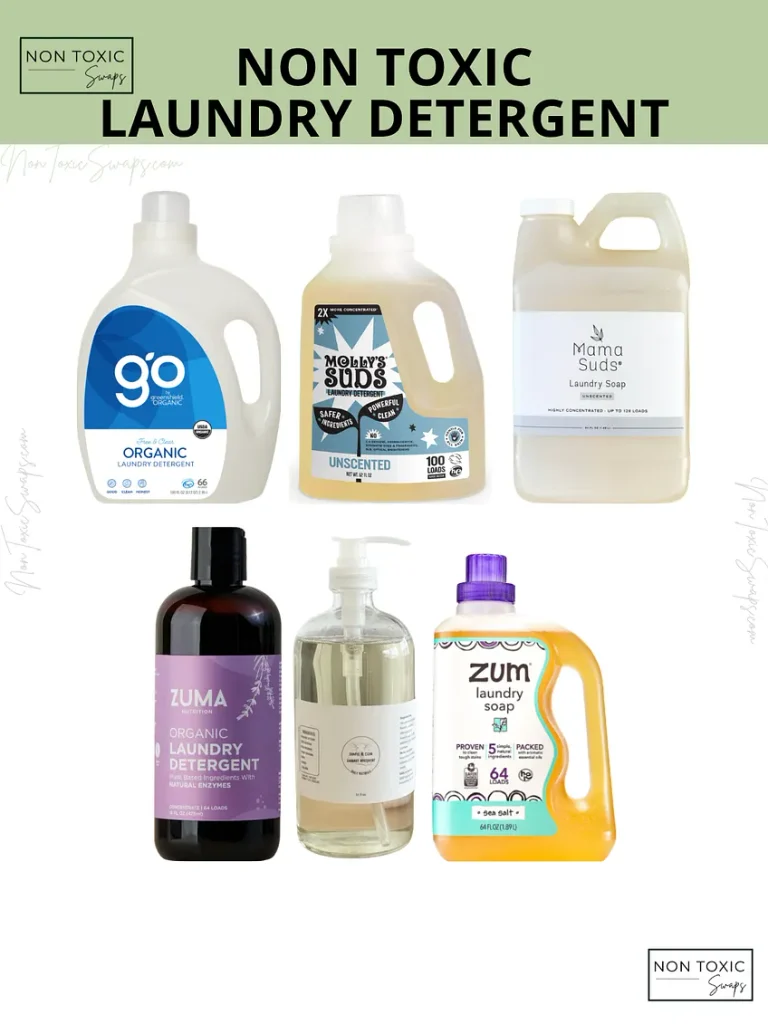
Best Non Toxic Liquid Laundry Detergent
Best Non Toxic Laundry Powder Detergent
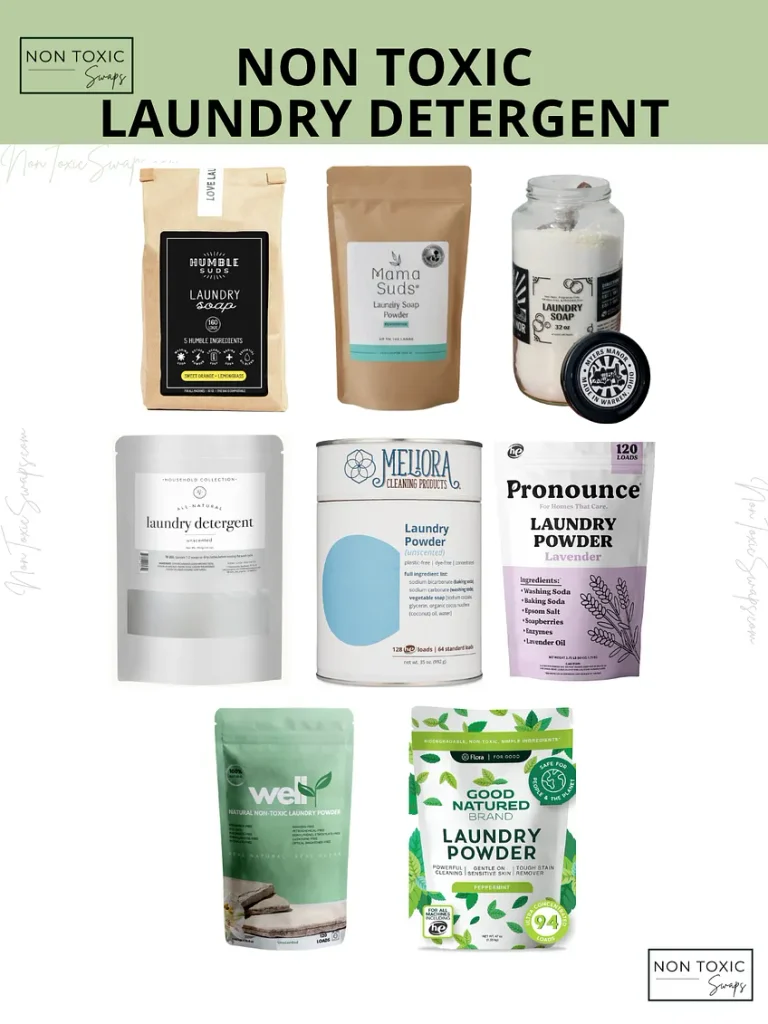
- Humble Suds Laundry Soap
- Mama Suds Laundry Powder
- Myers Manor Laundry Soap
- Rowe Casa Organics Laundry Detergent
- Meliora Laundry Powder
- Pronounce Laundry Powder
- Well Non Toxic Laundry Powder
- Good Natured Laundry Powder
Final Thoughts
Start with one bottle or bag of a cleaner option and run a few loads. Most people notice clothes feel softer (no optical brightener residue) and the “chemical clean” smell disappears within a couple of washes.