Ingredients to Avoid In Dishwasher Detergent
| Ingredient | What it does | Why it’s a concern |
|---|---|---|
| Ethoxylated & alkoxylated ingredients (PEG-, polysorbate, ceteareth-, alcohol alkoxylate; 1,4-dioxane is a contaminant, not on labels) | Cleaners, rinse aids | May be contaminated with 1,4-dioxane, a possible carcinogen, and ethylene oxide, a known carcinogen, both by-products of how they’re made. |
| Synthetic dyes (Red 40, Blue 1, Yellow 5) | Color | Added only for color; FDA notes Yellow 5 can cause itching and hives, and hyperactivity concerns come from food studies. |
| Phenoxyethanol | Preservative | A preservative made with ethylene oxide; EU regulators consider it safe up to 1%, except in products a baby might swallow. |
| Propylene glycol | Solvent | A common solvent that helps other ingredients penetrate skin; it’s generally considered safe, with toxicity reports mostly from high medical doses. |
| Potassium sorbate | Preservative | A preservative that damaged DNA in some lab studies, which isn’t proof of harm in skincare; skin allergy to it is rare. |
| Sodium benzoate (or benzoic acid) | Preservative | Can form benzene, a known carcinogen, when combined with vitamin C; shown in drinks, not well studied in skincare. |
| Parabens (methylparaben, ethylparaben, propylparaben, butylparaben, isobutylparaben, isopropylparaben, benzylparaben) | Preservative | Preservatives that act on estrogen receptors in lab studies; one human study linked higher levels to earlier puberty in girls. |
| Fragrance (or parfum) | Scent | An undisclosed blend of scent chemicals; fragrance is a leading cause of skin allergies from cosmetics and can include phthalates. |
| SLS (sodium lauryl sulfate) | Cleaner | A strong foaming cleanser that can strip skin’s oils and irritate dry or sensitive skin; researchers use it to cause irritation. |
Look for instead: fragrance-free, dye-free detergents (no “fragrance” or “parfum” on the label) with a short ingredient list.
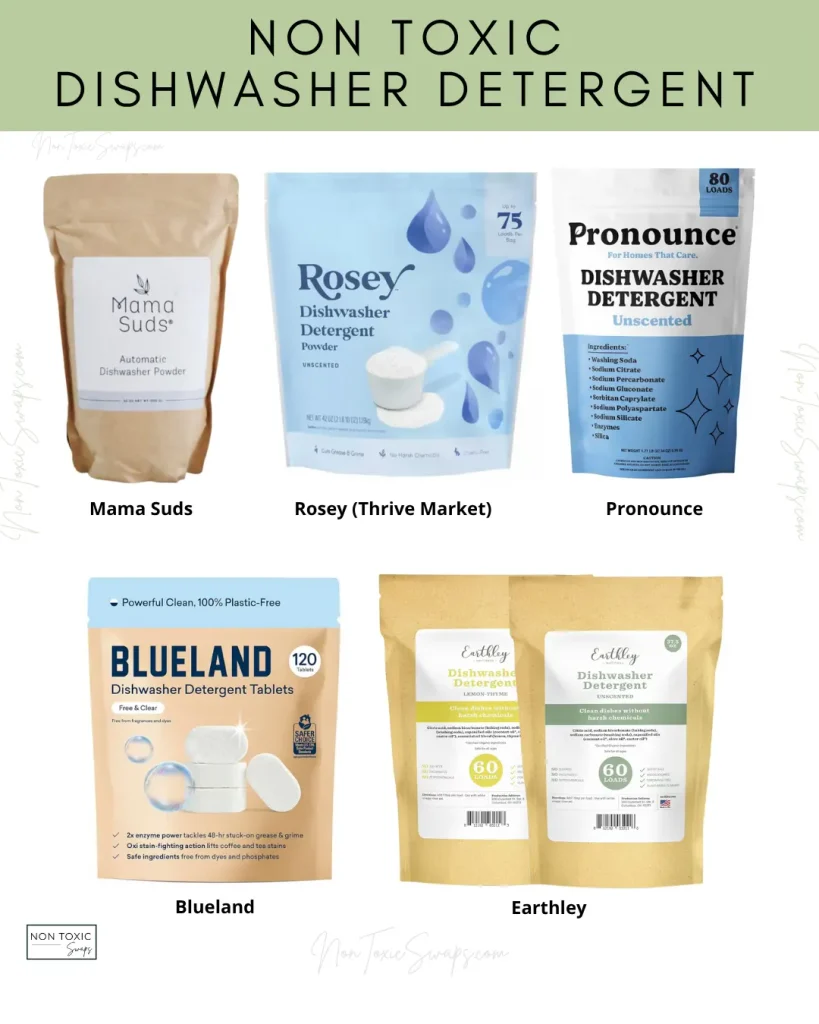
Non Toxic Dishwasher Detergents Swaps