Non Toxic Eyeshadow Swaps + 8 Popular Brands to Avoid
November 24, 2026
Conventional eyeshadows often contain fine powders, synthetic dyes, and fillers that can become airborne. We apply them close to our eyes and mucous membranes, and daily use means cumulative exposure adds up. Many conventional palettes are built on talc, which can be contaminated with asbestos, and some add PFAS like PTFE for a smooth, long-wear finish.
Many of us are already mindful about clean eating and non toxic cleaning. What we put on our skin is just as important.
Fortunately, there are beautiful, high-performing non toxic alternatives that deliver gorgeous color and shimmer without the chemical burden.
DISCLAIMERS:
As an Amazon affiliate, we may earn from qualifying purchases.
The information provided here is for general informational purposes only and does not constitute medical advice. Always consult with a qualified healthcare professional for any health concerns or before making any decisions related to your health or treatment.
Information provided in this post is updated as of the date of the post. Brands may reformulate products after the date of this post. Check back for updates.
Ingredients to Avoid in Eyeshadow
Ingredient
What it does
Why it’s a concern
Talc
Filler, anti-caking
Can be contaminated with asbestos, a known carcinogen; FDA testing has found asbestos in some talc-based cosmetics.
An undisclosed blend of scent chemicals; fragrance is a leading cause of skin allergies from cosmetics and can include phthalates.
Synthetic dyes (Yellow 5/CI 19140, Blue 1/CI 42090, Red 40)
Color
Added only for color; FDA notes Yellow 5 can cause itching and hives, and hyperactivity concerns come from food studies.
Lead (an impurity in pigments, not listed on labels)
None (contaminant)
Lead can be an impurity in color cosmetics; FDA recommends a 10 ppm maximum, which over 99% of products tested meet.
PFAS (PTFE, “perfluoro-” ingredients)
Long wear, smooth texture
Rarely listed on labels; a 2021 study found PFAS markers most often in foundations, waterproof mascaras and liquid lip products.
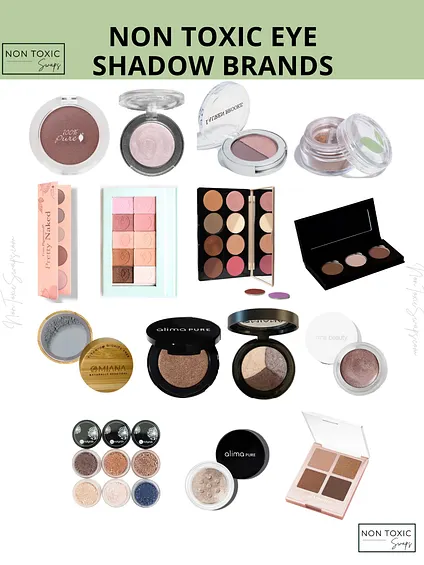
Look for instead: talc-free formulas with mineral pigments like mica and iron oxides, and plant-based binders like rice starch, plant oils and butters.
Popular Eyeshadow Brands to Avoid
These are popular picks you’ll see everywhere. Occasional use might be fine for many people, but daily application means repeated exposure.
Urban Decay Naked palettes: Often contain talc, synthetic fragrances, and have raised questions in heavy metal discussions.
Maybelline City Mini or Expert Wear: Drugstore favorites loaded with talc, parabens, and synthetic dyes.
L’Oréal Infallible or Colour Riche: Frequently include phthalates, talc, and fragrance; parent company ties to broader conventional formulas.
CoverGirl: Budget-friendly but typically features talc and potential irritants.
Revlon ColorStay or Smoky Shadows: Synthetic-heavy with common problematic preservatives.
NYX Professional Makeup palettes: Affordable and pigmented, but often include talc and synthetic components.
e.l.f. Eyeshadow palettes: Popular for value, yet contain many conventional fillers and dyes.
Huda Beauty palettes: Luxe packaging and intense color, but independent concerns around certain ingredients and performance additives.
Talc can be contaminated with asbestos, a known carcinogen, and FDA testing has found asbestos in some talc-based cosmetics. Talc-free shadows skip the question entirely.
Is Urban Decay Naked toxic?
The Naked3 palette uses talc in every shade and PTFE, a PFAS, in most shades, plus phenoxyethanol. It’s not on our clean list.
Does eyeshadow contain lead?
Lead isn’t an ingredient, but it can be an impurity in pigments. FDA recommends a 10 ppm maximum, and over 99% of products it tested meet it.
Final Thoughts
Makeup swaps can collectively reduce your daily chemical exposure. By switching to non toxic makeup you can eliminate your toxic load. If you haven’t started swapping yet, eyeshadow is a great place to start.