Non Toxic Summer Candle Swaps + 7 Popular Brands to Avoid
Summer evenings call for that warm glow, fresh citrus breezes, beachy vibes, or floral notes filling your home. But many conventional candles release toxins when burned, turning your relaxing ambiance into hidden exposure.
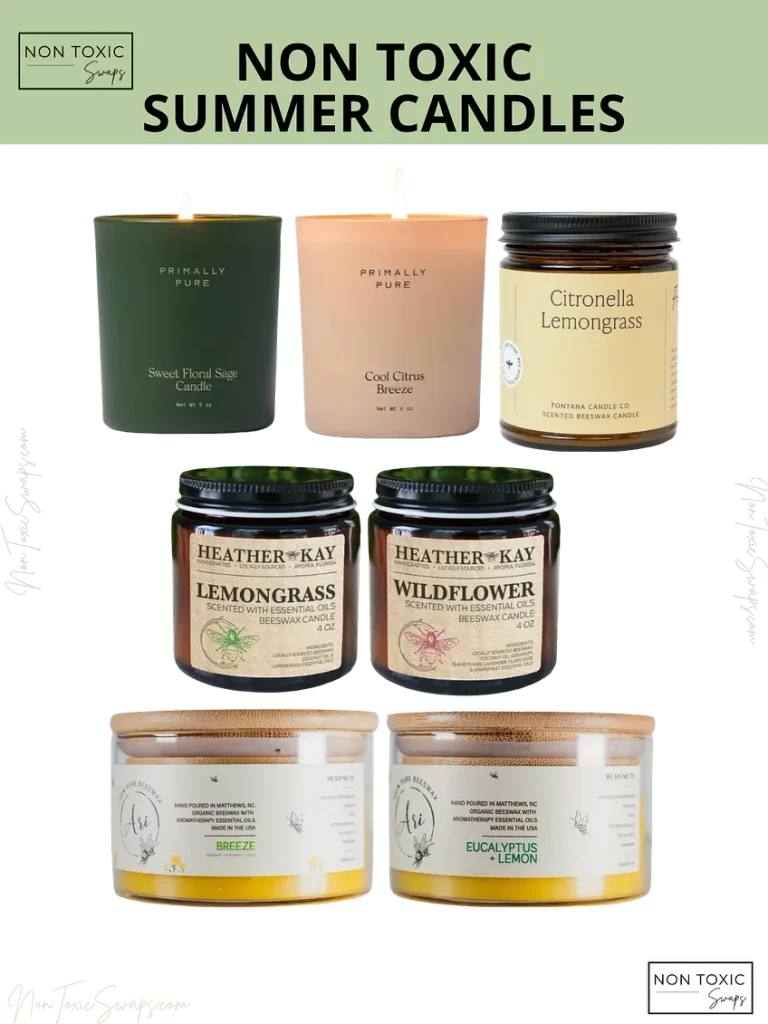
As someone deep into non-toxic living, I’ve swapped out paraffin-based candles loaded with synthetic fragrances for cleaner options. The right candles use beeswax, coconut wax, or soy wax with essential oils, burning cleaner with less soot and fewer harmful emissions.
Conventional candles often hide problematic ingredients behind “fragrance” or vague marketing. “Natural” or “soy” labels aren’t strictly regulated – always check the full ingredient list.
DISCLAIMERS:
As an Amazon affiliate, we may earn from qualifying purchases.
The information provided here is for general informational purposes only and does not constitute medical advice. Always consult with a qualified healthcare professional for any health concerns or before making any decisions related to your health or treatment.
Information provided in this post is updated as of the date of the post. Brands may reformulate products after the date of this post. Check back for updates.
Ingredients to Avoid in Candles
Summer heat + burning candles can amplify indoor air concerns. Look out for these common issues in mainstream options:
Paraffin Wax – A petroleum byproduct that releases benzene, toluene, and other volatile organic compounds (VOCs) when burned. Linked to indoor air pollution and potential respiratory irritation.
Synthetic Fragrance (Parfum) – Can contain phthalates (endocrine disruptors), undisclosed chemicals, and allergens. Often the biggest red flag for hormone and respiratory concerns.
Lead or Metal-Core Wicks – Older or cheap candles may have wicks with metals that release particles when burned (most U.S. brands have phased these out, but still check).
Dyes and Artificial Colorants – Unnecessary additives that can contribute to soot and chemical release.
Palm Wax (unsustainably sourced) – Can contribute to deforestation. Look for ethical sourcing if used.
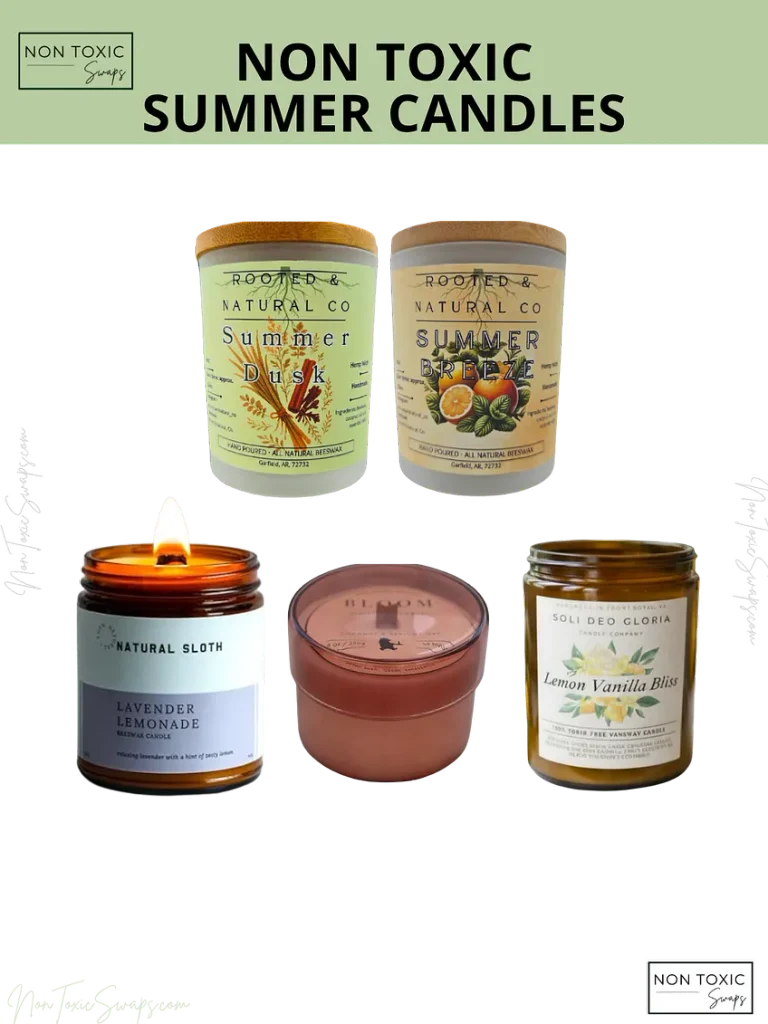
Opt for candles with beeswax (naturally air-purifying), coconut wax, or high-quality soy, paired with pure essential oils for scent. Wooden wicks or cotton wicks are generally cleaner.
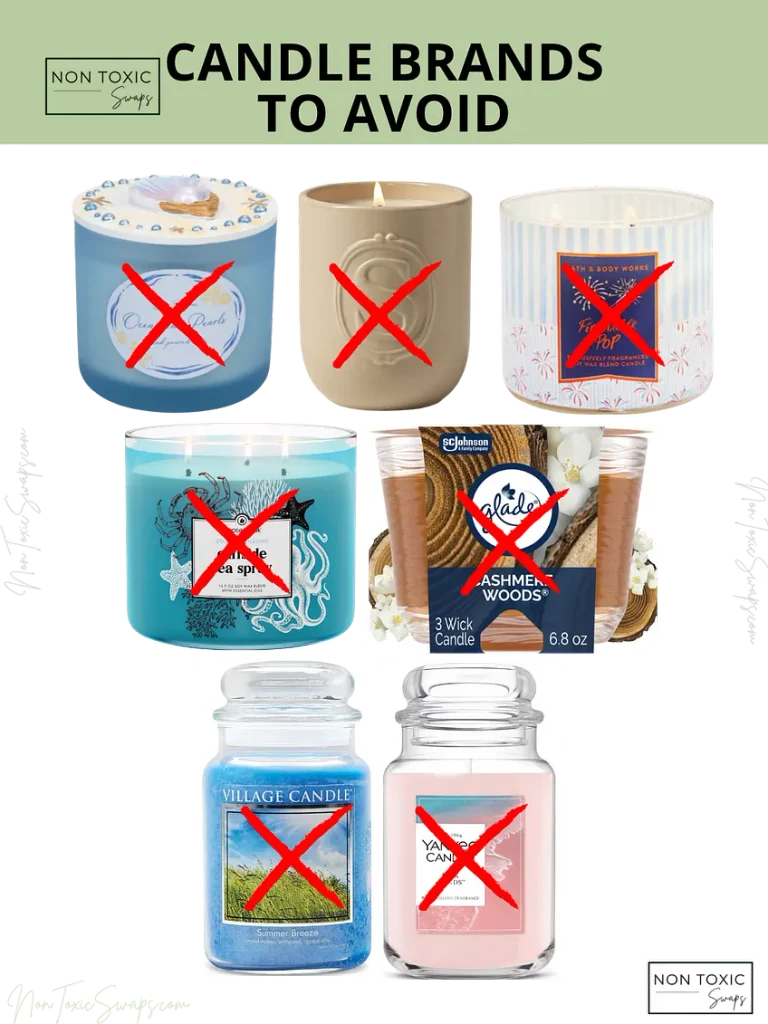
Mainstream Candle Brands to Avoid (or Approach with Caution)
These popular options are widely available but often rely on paraffin and synthetic scents:
Yankee Candle – Primarily paraffin wax with heavy synthetic fragrances. Strong scents but high VOC potential.
Bath & Body Works – Paraffin-based with intense synthetic fragrances and dyes. Popular for seasonal collections but not clean-burning.
Glade (candle line) – Often paraffin with synthetic fragrances designed for strong “air freshening.”
Scentsy (and similar wax warmer systems) – While not always burned traditionally, many use synthetic fragrance oils with potential phthalates.
Mainstore soy or “natural” lines from big retailers – Many “soy” candles blend paraffin or use synthetic fragrances despite marketing.
Febreze or big-box scented candles – Heavy on synthetics and designed for masking odors rather than clean burning.
Cheap imported or dollar-store candles – Frequently paraffin with unknown wick materials and fragrances.
These aren’t “poisonous” for occasional use, but for daily summer burning and better indoor air quality, cleaner swaps make sense.