Clean, safe drinking water is essential for health and well-being, but not all water filters are created equal. Switching to the right water filter can make a significant difference in water quality, taste, and safety. Below you’ll find what to check before you buy, then pitchers, countertop dispensers, under-sink and whole-house filters.
DISCLAIMERS:
- As an Amazon affiliate, we may earn from qualifying purchases.
- The information provided here is for general informational purposes only and does not constitute medical advice. Always consult with a qualified healthcare professional for any health concerns or before making any decisions related to your health or treatment.
- Information provided in this post is updated as of the date of the post. Brands may reformulate products after the date of this post. Check back for updates.
What to Know About Water Filtration
Know what’s in your water: Look up the contaminants in your water supply at the EPA or EWG website. This can help you make the best possible decision on which filters to buy. Visit company websites to see which filter best addresses the water quality in your location. A filter only removes what it’s certified for: EPA advises checking for NSF/ANSI 53 or 58 certification for PFAS (or the specific contaminant you’re worried about), confirming it in the certifier’s online listing, and replacing cartridges on schedule. “Tested to” a standard isn’t the same as certified.
Types of water filters: There are multiple methods of water filtration: pitcher, dispenser, under sink, whole house, bathtub & shower . Choose the right combination of filters for you.
The plastic dilemma: Almost all water filtration will include plastic components on either the filter itself, the container, or both. One option to reduce exposure is to pour your water into a glass pitcher after it has been filtered. This way water is not sitting in plastic 24/7.
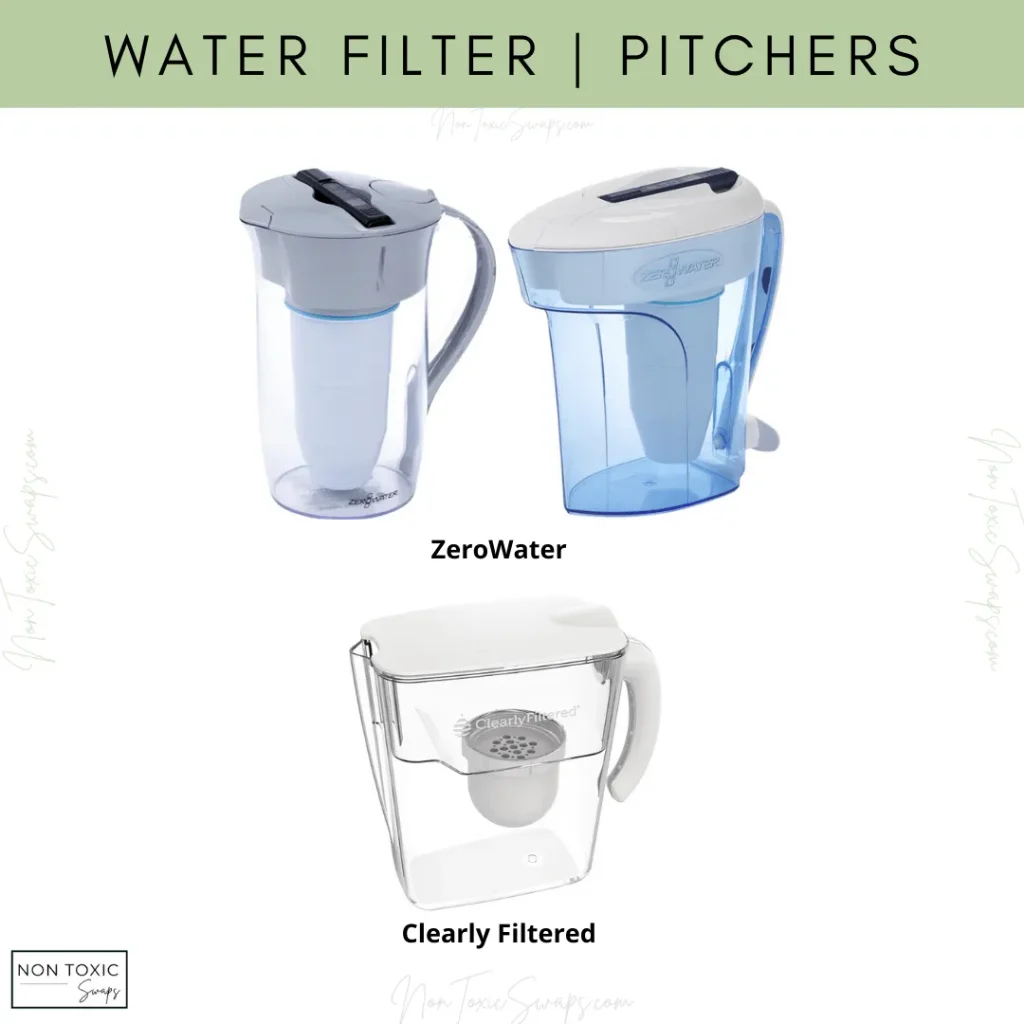
Filtered Water Pitchers
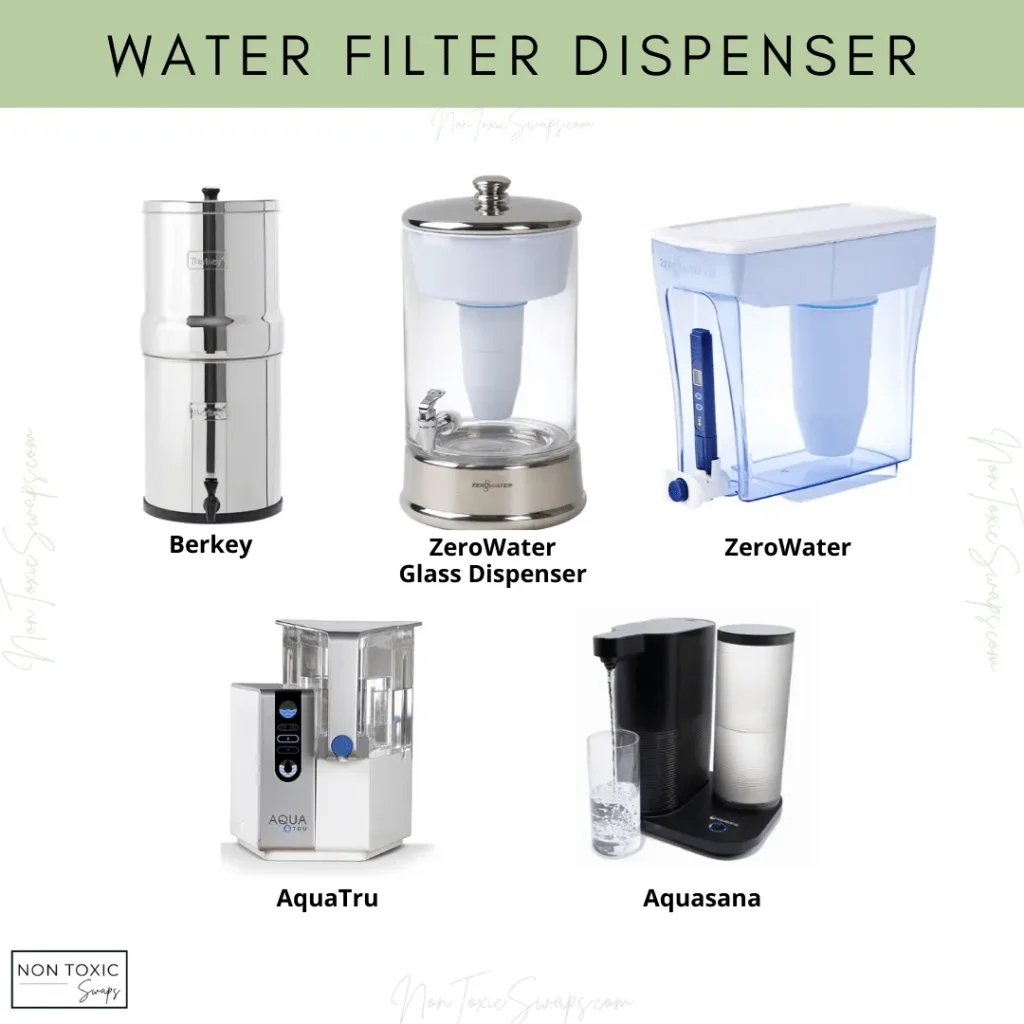
Filtered Water Dispensers
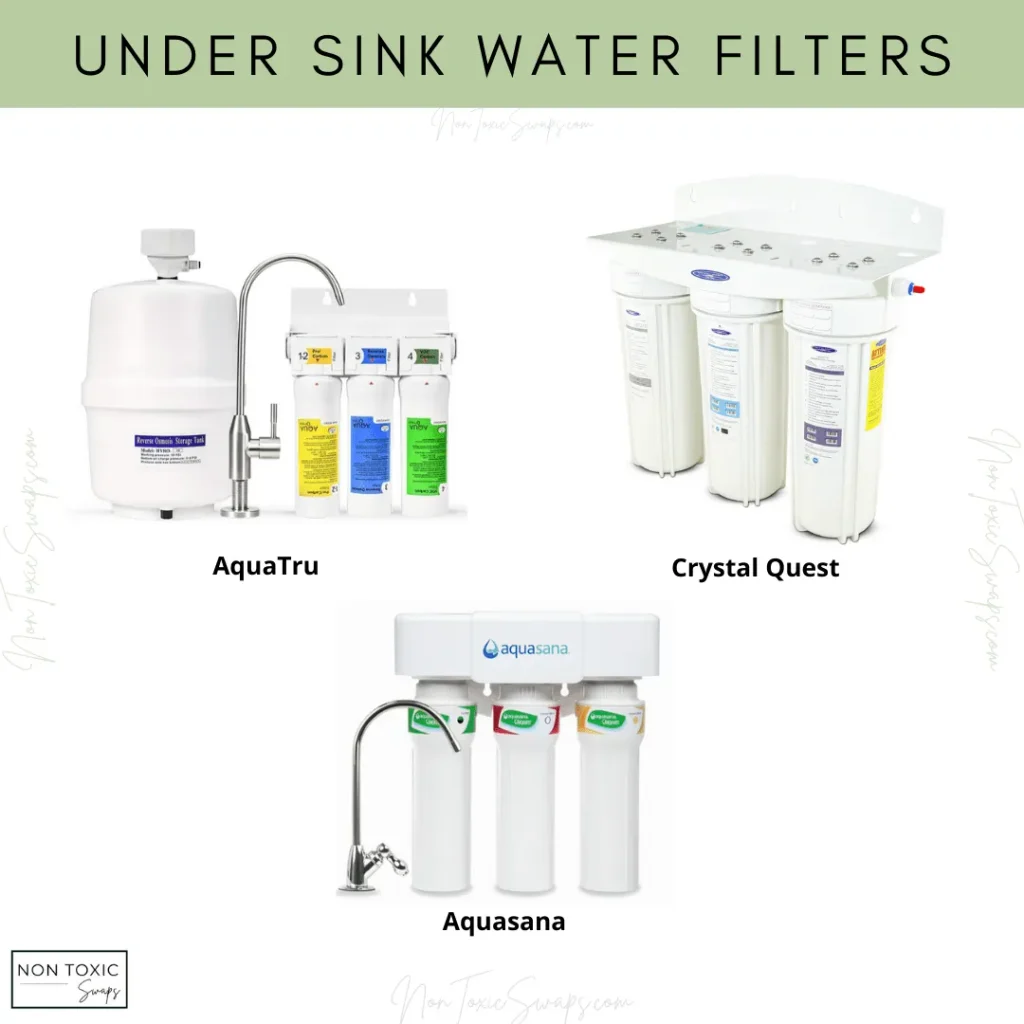
Under Sink Filter
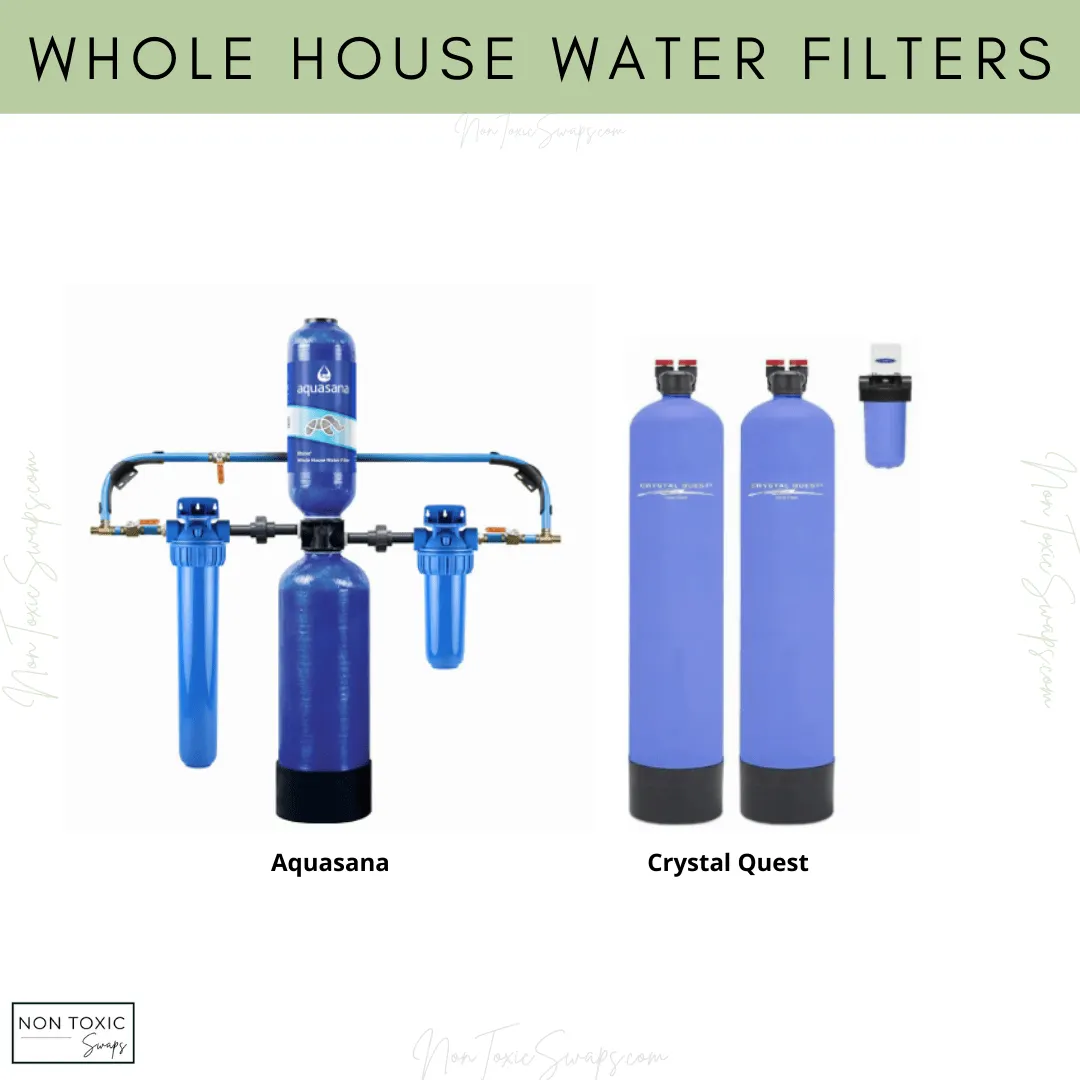
Whole House Filter
FAQ
Do water filters remove PFAS? Some do. EPA says activated carbon, reverse osmosis and ion exchange can reduce PFAS; look for NSF/ANSI 53 or 58 certification for PFAS reduction and confirm it in the certifier’s online listing.
How often should I change my filter? Follow the manufacturer’s schedule. EPA notes filters are only effective if they’re maintained according to the manufacturer’s instructions.
Final Thoughts
Start by finding out what’s in your water, then choose a filter certified to remove it, and replace cartridges on schedule. For the rest of your kitchen, see our Non Toxic Kitchen Essentials guide.