Best Non Toxic Kitchen Essentials | Food Storage, Cookware & Accessories
November 22, 2026
Your kitchen is where food meets materials every day: pans, bakeware, containers and utensils. Many conventional options use nonstick PFAS coatings or plastic.
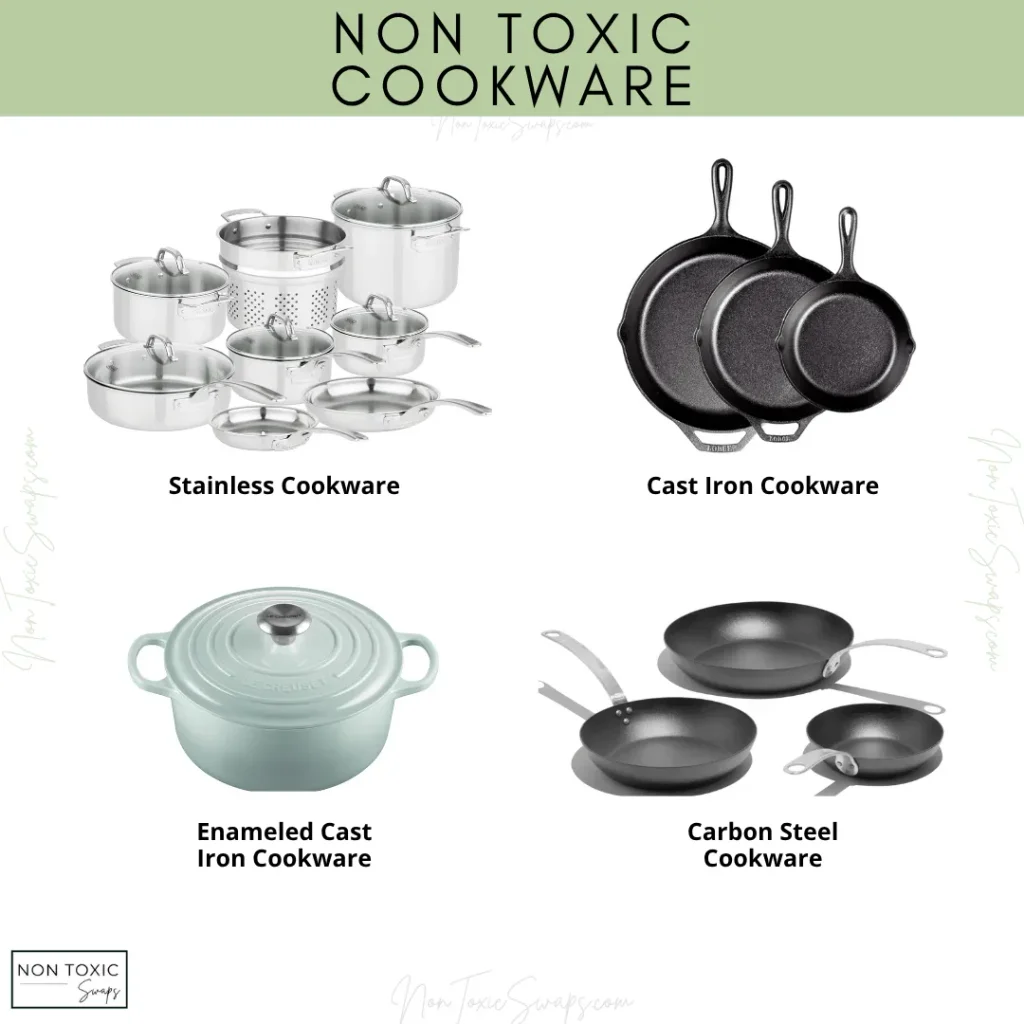
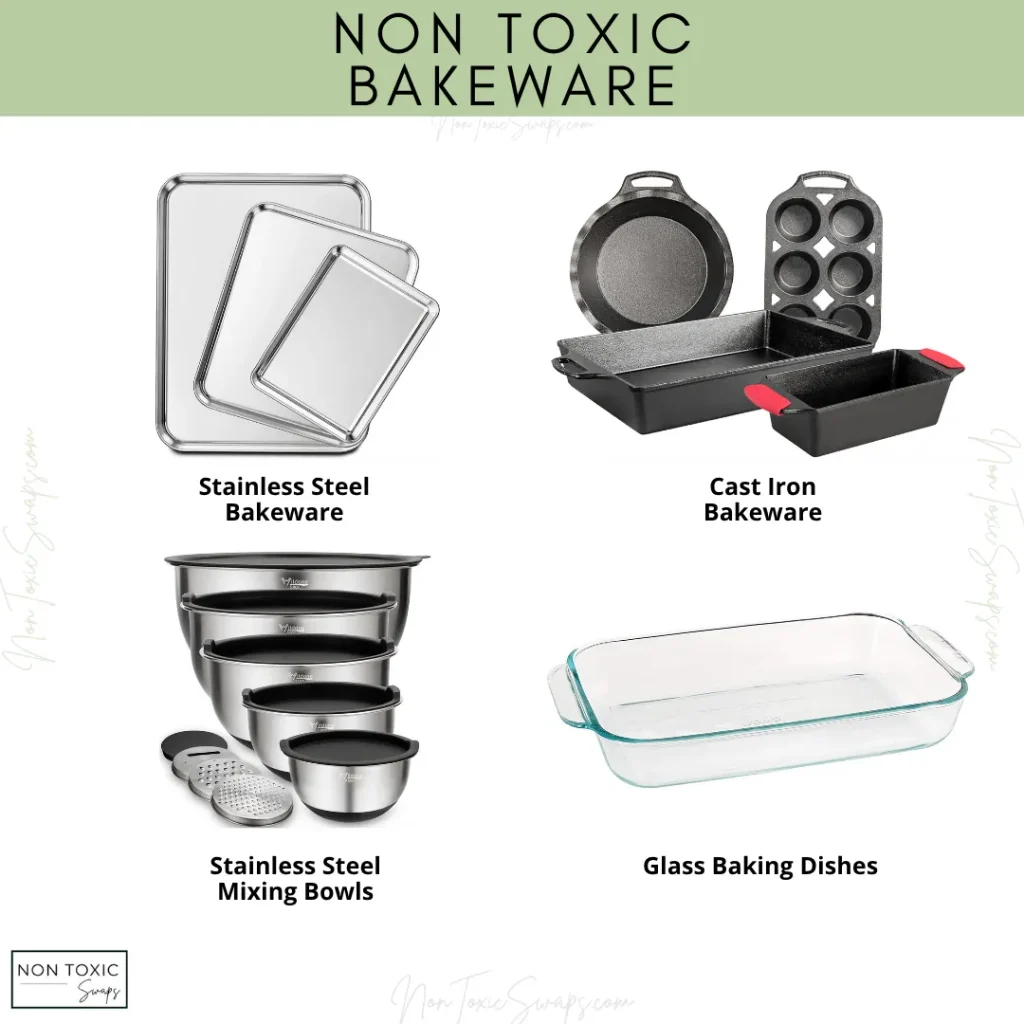
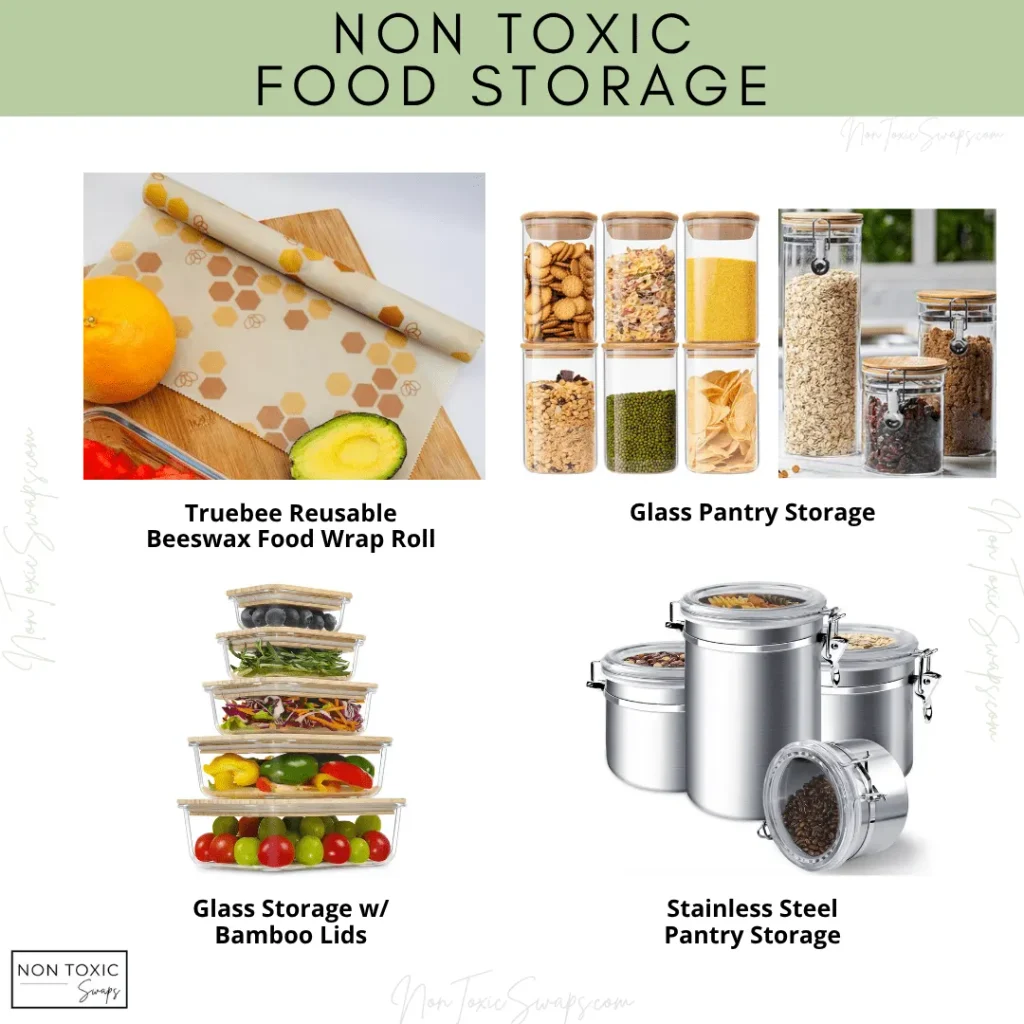
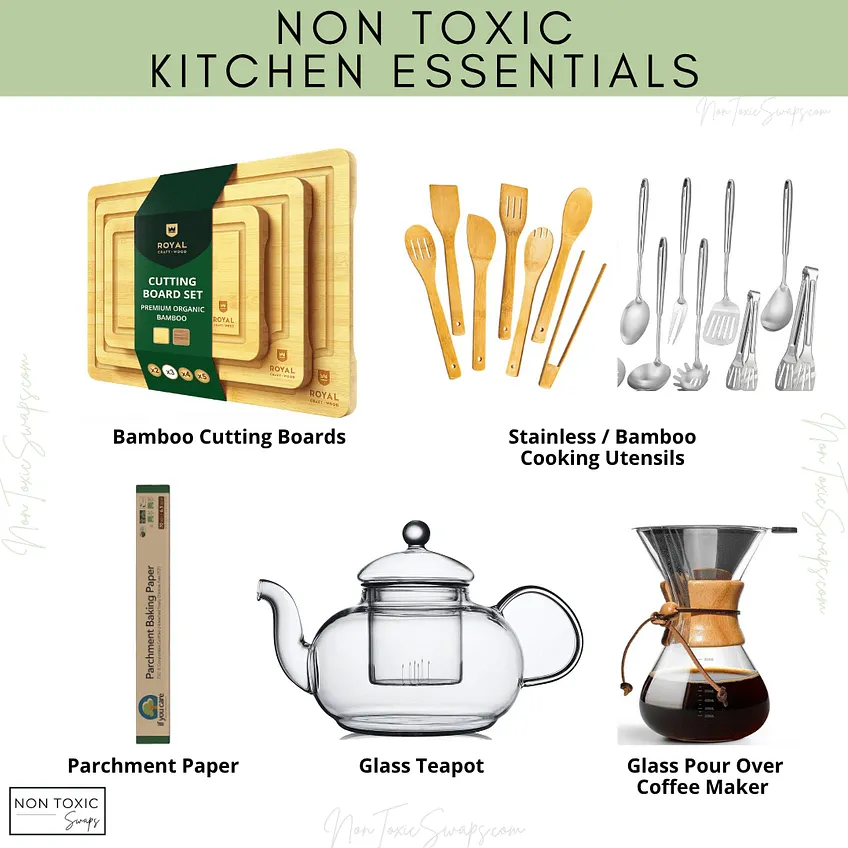
Below you’ll find the materials to avoid, then non toxic cookware, bakeware, food storage and kitchen tools made from stainless steel, cast iron, glass and wood.
DISCLAIMERS:
As an Amazon affiliate, we may earn from qualifying purchases.
The information provided here is for general informational purposes only and does not constitute medical advice. Always consult with a qualified healthcare professional for any health concerns or before making any decisions related to your health or treatment.
Information provided in this post is updated as of the date of the post. Brands may reformulate products after the date of this post. Check back for updates.
Materials to Avoid in the Kitchen
Material
Where you’ll find it
Why it’s a concern
PFAS nonstick coatings (PTFE, “Teflon”)
Nonstick pans, bakeware
“Forever chemicals” that build up in the body; one, PFOA (phased out of US manufacturing by 2015), is a known carcinogen.
BPA and other bisphenols (polycarbonate, recycling code 7 “PC”)
Plastic containers, some can linings
A plastic chemical the EU banned from food contact materials in 2025 over immune-system effects; FDA still considers approved uses safe.
Look for instead: stainless steel, cast iron, enameled cast iron, carbon steel and glass for cooking and storage, and wood or bamboo for utensils and boards.
FDA says nonstick coatings release negligible PFAS into food, and PFOA was phased out of US manufacturing by 2015. PFAS still build up in the body and environment, and IARC classifies PFOA as carcinogenic to humans, so many people choose stainless steel, cast iron or carbon steel instead.
Is glass or plastic better for food storage?
Glass isn’t plastic, so it doesn’t contain bisphenols. The EU banned BPA from food contact materials in 2025 over immune-system effects; FDA still considers approved uses safe.