Why Non Toxic Lip Products Matter
Toxic Ingredients to Avoid in Lip Products
| Ingredient | What it does | Why it’s a concern |
|---|---|---|
| Lead (an impurity in pigments, not listed on labels) | None (contaminant) | Lead can be an impurity in lip color; FDA recommends a 10 ppm maximum, which over 99% of products tested meet. |
| Parabens (methylparaben, propylparaben) | Preservative | Preservatives that act on estrogen receptors in lab studies; one human study linked higher levels to earlier puberty in girls. |
| Fragrance (or parfum) | Scent | An undisclosed blend of scent chemicals; fragrance is a leading cause of skin allergies from cosmetics and can include phthalates. |
| Petroleum waxes & mineral oil (petrolatum, mineral oil, paraffin, microcrystalline wax, ozokerite) | Moisturizer, texture | Poorly refined grades can contain PAHs; the highly refined grades required in cosmetics aren’t expected to pose a health risk. |
| Microplastics (polyethylene, polypropylene) | Texture | Synthetic polymer particles that don’t break down in the environment; the EU is phasing them out of makeup by 2035. |
| Synthetic dyes (Red 6, Red 7, Yellow 5, Blue 1) | Color | Added only for color; FDA notes Yellow 5 can cause itching and hives, and hyperactivity concerns come from food studies. |
| Phthalates (usually hidden in “fragrance”) | Fragrance solvent | Solvents often hidden in fragrance; one human study linked higher levels in pregnant mothers to shorter anogenital distance in baby boys. |
| Phenoxyethanol | Preservative | A preservative made with ethylene oxide; EU regulators consider it safe up to 1%, except in products a baby might swallow. |
| BHT (butylated hydroxytoluene) | Antioxidant | A synthetic antioxidant EU regulators reviewed for possible hormone effects; they consider it safe in makeup up to 0.8%. |
| Ethoxylated ingredients (PEG-, polysorbate) | Emulsifiers | May be contaminated with 1,4-dioxane, a possible carcinogen, and ethylene oxide, a known carcinogen, both by-products of how they’re made. |
Look for instead: fragrance-free lip color made with plant oils, butters and waxes (castor oil, cocoa or shea butter, candelilla wax), colored with fruit pigments or mineral pigments like iron oxides.
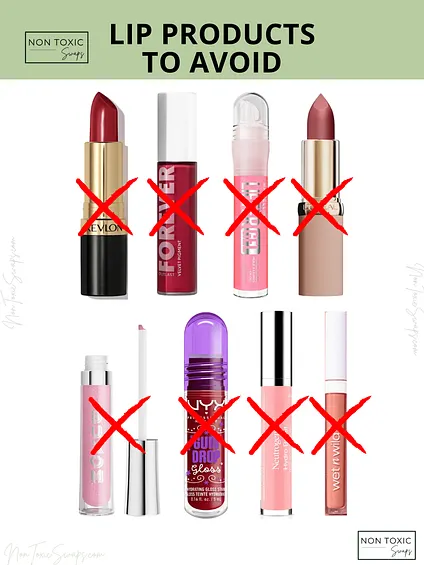
9 Lip Products Brands to Avoid
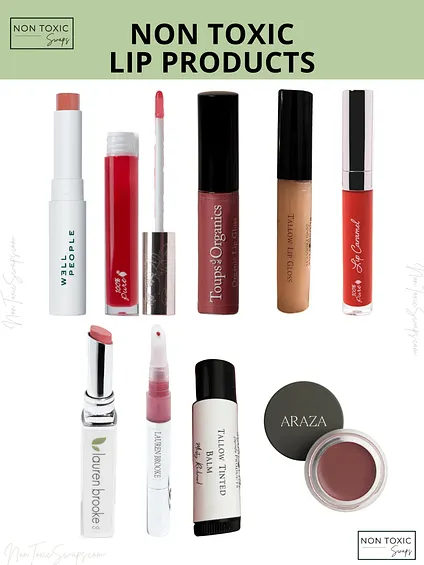
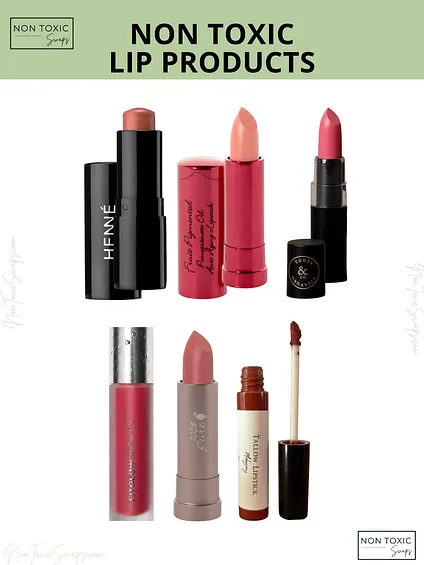
Best Non Toxic Lip Product Recommendations
FAQ
Lead isn’t an ingredient, but it can be an impurity in lip color. FDA recommends a 10 ppm maximum, and over 99% of the products it tested meet it.
It uses petroleum waxes, polyethylene (a microplastic), BHT and synthetic dyes. It’s not on our clean list.
The highly refined grades required in cosmetics aren’t expected to pose a health risk. Germany’s BfR notes lip care is partly swallowed and estimates the amount is under 10% of the acceptable daily intake.
Final Thoughts
Switching to non toxic lipsticks, tints, and glosses is a simple, high-impact change for your health and beauty routine. Your lips will feel softer, look vibrant, and you’ll avoid unnecessary chemicals.
For everyday moisture, see our Non Toxic Lip Balm, and for the rest of your makeup bag, our Non Toxic Eyeshadow and Non Toxic Primers guides.